

Go to content

Church of the Visitation of Our Lady in Għarb, Gozo

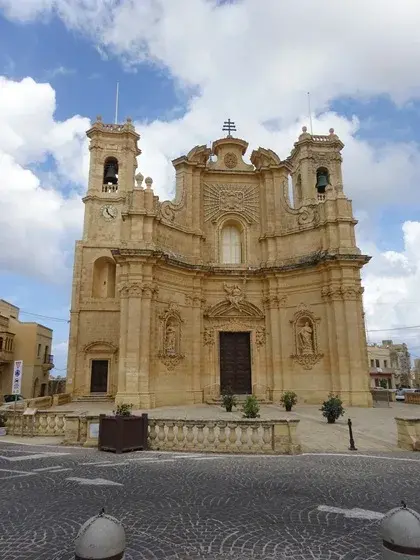
The Church of the Visitation of Our Lady stands at the heart of Għarb, one of Gozo’s oldest and most characterful villages. Its sweeping baroque façade, twin bell towers and broad flight of steps form the impressive backdrop to the village square. The church is not only Għarb’s principal place of worship; it is also one of the finest architectural landmarks in western Gozo.

As a resident of Malta, I am interested in churches, and Malta has many. I visited this church and it is well worth the visit. Also, the paving right in front of the church (roundabouts). It is great fun for both adults and children to figure out how this clock sundial works.

Visitors come here for several reasons. Some enter to attend Mass or pray, while others are drawn by the church’s history, architecture and religious art. The setting is equally memorable. Traditional limestone houses, stone balconies, the historic cross in the square and the nearby folklore museum create one of Gozo’s most attractive village scenes.

The church is dedicated to the Visitation, the biblical meeting between the Virgin Mary and her relative Saint Elizabeth. In Maltese, the dedication is commonly known as “Iż-Żjara tal-Madonna”. The parish feast is celebrated liturgically on 31 May, while the principal outdoor festivities normally take place during the first weekend of July.

Why visit the Church of the Visitation in Għarb?

The church deserves a place on a Gozo itinerary because it combines architecture, history, faith and a remarkably authentic village atmosphere. Unlike some major attractions, it can often be experienced quietly. A short visit allows you to study the sculpted façade and village square, while a longer visit gives time to appreciate the interior, side altars, paintings and devotional details.

The principal reasons to visit are:

• The dramatic concave baroque façade.
• The balanced twin bell towers.
• The historic village square and seventeenth-century cross.
• The church’s connection with the creation of Għarb parish in 1679.
• The richly decorated interior and religious artworks.
• Its convenient position close to Ta’ Pinu, Dwejra and the Għarb Folklore Museum.
• The opportunity to experience a living Gozitan parish rather than a building preserved only as a monument.

Quick visitor summary

Location
Pjazza taż-Żjara tal-Madonna, Għarb, Gozo, Malta

Coordinates
Approximately 36.06028, 14.20889

Admission
Entry is normally free. Donations towards the maintenance of the church are appreciated.

Typical visit duration
Allow 20 to 40 minutes for the church and square. Allow longer if you wish to visit the folklore museum or walk through the historic centre of Għarb.

Best time to visit
Weekday mornings are usually peaceful. Avoid entering during a service unless you intend to participate respectfully.

Dress code
This is an active Roman Catholic church. Shoulders and upper legs should be covered, hats should be removed and conversations kept quiet.

Photography
Photography is usually acceptable when no service is taking place, but flash and tripods may be inappropriate. Observe any notices and never photograph worshippers without permission.

Accessibility
The main approach includes steps. Visitors who need step-free access should inspect the side entrances or contact the parish before travelling, because access arrangements can change.

Where is the Church of the Visitation of Our Lady?

The church occupies the principal square in the old centre of Għarb, on the western side of Gozo. Għarb lies between Victoria and the coastal area around Dwejra and San Lawrenz. The church is easy to recognise because its tall façade and bell towers rise above the surrounding low limestone buildings.

The village name “Għarb” means “west”, reflecting its position on the island. The area remains more rural than many of Gozo’s busier settlements. Fields, narrow lanes, old farmhouses and chapels surround the village, making the church an excellent starting point for exploring western Gozo.

The Visitation of Mary and Saint Elizabeth

The church’s dedication refers to the episode in the Gospel of Luke in which Mary, after learning that she would become the mother of Jesus, travelled to visit Elizabeth. Elizabeth was herself expecting a child, John the Baptist. The meeting became an important subject in Christian art and devotion because it represents faith, humility, service and joy.

The words traditionally associated with Mary’s response during the Visitation form the Magnificat, one of Christianity’s best-known prayers. In churches dedicated to the Visitation, the titular painting commonly shows Mary and Elizabeth greeting one another, often accompanied by members of their households.

In Għarb, devotion to the Visitation existed before the present parish church was built. Local tradition associated the earlier place of worship with graces received through prayer. The devotion was sometimes linked with the name “Tal-Virtù”, a reference to spiritual virtue or miraculous favour.

History of the Church of the Visitation


The earlier church and the growth of Għarb

Before the present monumental church existed, the people of Għarb worshipped in a smaller church. During the seventeenth century the rural community expanded, and the distance from the Cathedral in Victoria made parish life difficult. The need for a local parish became increasingly clear, particularly for the administration of the sacraments.

A replacement church was authorised in the 1660s and constructed during the following decade. The villagers contributed towards the work, demonstrating the close relationship between the church and the local community.

Għarb becomes a parish in 1679

On 29 August 1679, Bishop Michele Girolamo Molina established Għarb as a separate parish. The decision recognised both the size of the community and its practical distance from the Cathedral parish in Victoria. Dun Ġanmarija Camilleri became the first parish priest.

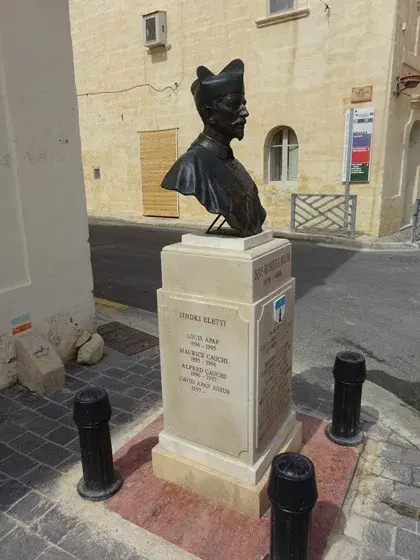
Bust of Bishop Michele Girolamo Molina near Għarb Parish Church in Gozo  The monument to Bishop Michele Girolamo Molina, during whose episcopate Għarb became a separate parish.

This date is a turning point in Għarb’s history. Parish status gave the village an independent religious identity and created the institutional foundation for the much larger church that visitors see today.

The monument near the church commemorates Bishop Molina and his role in establishing the parish. The inscription and bust therefore relate directly to the history of the building and the development of the village.

Planning a larger parish church

The earlier building soon became inadequate for the parish. In 1698, the residents requested land for a new and more ambitious church. Permission was granted and a site known locally as Ta’ Nawrata was selected.

The design is traditionally attributed to the Maltese architect Ġużeppi Azzopardi, known as “Iż-Żgħir”. Construction began around the turn of the eighteenth century and continued for several decades. Sources commonly date the building campaign from 1699 or shortly afterwards until 1729 or 1732, reflecting the gradual completion and furnishing of such a major project.

Consecration and later status

The church was solemnly consecrated on 28 September 1755. In 1774, the parish obtained archpresbyteral status, increasing its ecclesiastical importance.

The church later became collegiate and was eventually elevated to the dignity of a minor basilica. These titles reflect its status within the religious life of Gozo, but visitors should remember that its primary function remains that of a working parish church.

Architecture of Għarb Parish Church


A remarkable concave baroque façade

The church’s most distinctive feature is its concave façade. Rather than presenting a flat wall to the square, the central section curves inwards, creating depth, movement and theatrical shadow. This makes the building appear to embrace the square and draws the eye towards the main doorway.

The façade has often been compared with the Roman baroque architecture of Francesco Borromini, particularly the Church of Sant’Agnese in Agone in Piazza Navona. The comparison should be understood as an architectural resemblance rather than proof of direct authorship or an exact copy. Both façades use curvature and towers to turn an urban church frontage into a dramatic composition.

Twin bell towers

The two bell towers provide vertical emphasis and frame the central façade. Their height makes the church visible from surrounding streets and countryside. The towers also express the church’s role as the focal point of the settlement.

Look carefully at the clocks, bells, openings and carved stone details. Gozitan limestone changes character throughout the day: pale cream in strong sunlight, honey-coloured near sunset and deeply textured when shadows fall across the carvings.

The dome and church plan

Behind the façade rises the dome, an important feature of Maltese and Gozitan parish architecture. The interior follows the monumental spatial language associated with the baroque period, directing attention towards the high altar and titular work.

The heavy masonry, side chapels and sculpted architectural elements were designed not simply for beauty but to create a dignified setting for worship, processions and the annual parish feast.

The broad staircase and village square

The wide staircase strengthens the ceremonial quality of the entrance. During feast days, weddings and religious events, the steps become part of the public stage of village life.

The surrounding square is integral to the experience of the church. Do not photograph only the façade. Step back to include the cross, neighbouring houses, balconies and open space. Together they show how the church was designed as the centre of the community.

Inside the church

The interior contrasts with the restrained limestone exterior through its richer colours, gilded details, painted decoration and devotional objects. As in many Gozitan churches, the result reflects generations of parish investment rather than a single decorative campaign.

The titular painting of the Visitation

The titular artwork represents the meeting of the Virgin Mary and Saint Elizabeth. It is attributed to Francesco Zahra, one of eighteenth-century Malta’s most important baroque painters.

The painting is central to the church’s dedication and is best viewed from a respectful distance before examining the surrounding architectural frame. Notice the gestures and expressions of the two women, the arrangement of supporting figures and the use of light to communicate spiritual meaning.

Side altars and devotional art

The side altars reflect the wider devotional life of the parish. Their paintings, statues, altar furnishings and inscriptions reveal how local religious practice developed over time.

Visitors should walk slowly around the interior rather than focusing only on the high altar. Details may include carved stone, coloured marble, gilding, silverwork, ex-votos, memorial inscriptions and statues used during religious celebrations.

The parish feast statue

Gozitan village feasts traditionally centre on a processional statue of the patron or titular subject. During the annual celebration, the statue is carried through decorated streets accompanied by clergy, parishioners, music, bells and fireworks.

Outside the feast period, the statue may be displayed inside the church. Its appearance and location can vary according to the liturgical calendar and preparations for celebrations.

Ceiling, dome and decorative programme

Remember to look upwards. The ceiling, dome and supporting arches form part of the building’s visual programme. Their painted and sculpted decoration transforms the interior into a unified religious space.

Natural light changes the atmosphere considerably. Morning light may illuminate one side of the nave, while later light emphasises the dome or gilded details. This is one reason why repeat visits can feel surprisingly different.

The church as a living place of worship

The Church of the Visitation is not primarily a tourist attraction. It is the spiritual centre of Għarb parish and is used for Mass, baptisms, weddings, funerals, feast celebrations and private prayer.

Visitors should pause at the entrance and assess whether a service is taking place. During Mass, remain at the rear unless you are participating. Silence mobile phones, avoid walking around, and do not use flash photography.

Respectful behaviour improves the experience for everyone and protects access to Malta and Gozo’s active churches.


People who shaped modern Għarb

One of the monuments in Pjazza taż-Żjara tal-Madonna honours Bishop Nikol Ġużeppi Cauchi (1929–2010), one of the most respected church leaders in Gozo's recent history.

Born in Għarb, Bishop Cauchi served as Bishop of Gozo from 1972 until 2005. During more than three decades he guided the Diocese of Gozo through a period of significant religious and social change while remaining closely connected to his home village. His pastoral work, commitment to education and support for local communities earned him widespread respect throughout the Maltese Islands.

Bronze monument to Bishop Nikol Ġużeppi Cauchi in Għarb, Gozo  The monument to Bishop Nikol Ġużeppi Cauchi, who was born in Għarb and served as Bishop of Gozo.

The bronze monument near the parish church was erected to commemorate his contribution to both the Diocese of Gozo and the village of Għarb. Visitors often pass the statue without realising that it honours a bishop who was born only a few metres from the church and whose influence extended across the whole island of Gozo.

Together with the nearby monument to Bishop Michele Girolamo Molina, who established Għarb as an independent parish in 1679, the statues illustrate how two bishops, separated by more than three centuries, both played an important role in the history of the village.


The parish feast in Għarb

The liturgical feast of the Visitation is celebrated on 31 May. The principal outdoor festa is normally held during the first weekend of July, although dates and programmes should always be checked locally.

During the festa, the village is transformed with banners, lights, statues, music and street decorations. The church façade becomes the focus of evening celebrations, while the religious procession remains the spiritual centre of the event.

A feast visit offers a vivid experience of Gozitan culture, but it is very different from a quiet architectural visit. Roads may close, parking becomes difficult and the square can be crowded. Arrive early and follow local traffic directions.

What makes this church different from Ta’ Pinu?

The Church of the Visitation and the nearby Basilica of the National Shrine of the Blessed Virgin of Ta’ Pinu are separate churches with different histories and functions.

The Church of the Visitation:
• Stands in the centre of Għarb.
• Serves as the parish church.
• Has a predominantly baroque character.
• Is surrounded by the historic village square.

Ta’ Pinu:
• Stands in open countryside outside the village centre.
• Is Malta’s national Marian shrine.
• Is associated with reported heavenly voices and pilgrimage.
• Has a later neo-Romanesque architectural character.

Both are worth visiting. Together they show two very different expressions of Gozitan religious architecture and devotion.

How long should you allow?

A focused visit to the church takes approximately 20 to 30 minutes. Allow about 40 minutes if you wish to examine the square, read the information panel and photograph the exterior.

A fuller Għarb visit can take two to three hours when combined with the Għarb Folklore Museum, village lanes and nearby chapels. A half-day itinerary can also include Ta’ Pinu and Dwejra.

Best photography viewpoints


From the opposite side of the square

Stand well back to capture the complete façade, steps and bell towers. A vertical composition works well, but a wider image including the cross and neighbouring buildings gives more context.

From the side of the square

A diagonal viewpoint reveals the depth of the concave façade more clearly than a straight frontal photograph. It also shows how the church relates to the surrounding streets.

Close architectural details

Use a moderate zoom for clocks, carvings, niches, inscriptions and bell-tower details. These photographs complement the main façade image and help tell the architectural story.

Inside the church

Interior photography is most successful without flash. Stabilise the camera carefully, but do not obstruct aisles or use a tripod without permission. Exposure may be difficult because windows and lamps are much brighter than the surrounding interior.

Responsible visiting

• Dress appropriately for a religious building.
• Keep voices low.
• Do not enter restricted areas.
• Never touch paintings, statues, altar furnishings or historic stonework.
• Do not use drones in or around the village without the legally required permissions.
• Avoid photographing children or worshippers without consent.
• Leave a donation when possible.
• Check service times before planning detailed interior photography.

Is the Church of the Visitation worth visiting?

Yes. The church is one of the strongest reasons to explore Għarb rather than treating the village only as a route to Ta’ Pinu or Dwejra. Its façade is among Gozo’s most memorable baroque compositions, and the square preserves the close relationship between parish church and village life.

The visit is especially rewarding for travellers interested in architecture, religious heritage, photography or traditional Gozitan settlements. Because entry is usually free and the church is close to several major western Gozo attractions, it is easy to include in a wider itinerary.

Opening hours and Mass times

Opening hours and Mass schedules may change for feast preparations, funerals, weddings and seasonal timetables. Present times as guidance only and advise visitors to confirm with the parish before making a special journey.

The church is generally accessible around scheduled services and parish activities, but it should not be described as having guaranteed museum-style opening hours. Doors may close temporarily for cleaning, private ceremonies, funerals or preparations.

Published parish information indicates the following typical schedule:

Weekdays
Morning Masses are commonly held at approximately 6:00 and 7:45.
The evening Mass is generally earlier in winter and later in summer.

Sundays and feast days
Masses are normally celebrated in the early morning, at 7:00, 8:30 and 10:00, with an additional late-afternoon service.

Because published schedules differ and may be updated seasonally, visitors should confirm the current timetable directly with the parish or through the official Malta church Mass-time service before travelling specifically for Mass.

Parish telephone
+356 2155 6129

Visitor warning
Do not guarantee that the church will be open throughout the afternoon. Many churches in Malta and Gozo close between services.

Admission and donations

There is normally no admission charge to enter the parish church. A voluntary donation is appropriate and contributes to maintenance, restoration, lighting and parish expenses.

There is no need to buy a ticket in advance. Tours of Gozo may include a stop in Għarb, Ta’ Pinu or western Gozo, but these are separate commercial services rather than admission tickets to the church.

Getting to Għarb by car

From Victoria, follow signs towards Għarb, San Lawrenz or Dwejra. The journey usually takes around 10 to 15 minutes outside peak traffic, although roadworks and village events can increase travel time.

The streets near the historic square are narrow. Drive slowly, respect one-way restrictions and do not block residential doorways, garage entrances or access for parish vehicles.

Parking

Limited on-street parking may be available around the outer streets of the village. Spaces immediately beside the church can be restricted, especially during Mass, funerals, weddings and the annual feast.

The best approach is to park legally a short walk away rather than circling the square. Always check:
• Yellow lines.
• Reserved bays.
• Time restrictions.
• Temporary feast notices.
• Access requirements for residents.

Getting to Għarb by bus

Gozo’s bus network is centred on Victoria. Services to western villages may change by season or timetable revision, so do not rely on an old route number without checking.

Use the official Malta Public Transport journey planner and enter:
Destination: Għarb
Landmark: Għarb parish church or the main village square

Visitors arriving at Mġarr Harbour can travel first to Victoria and change there for a service towards Għarb. Allow extra time for connections.


Walking and cycling

Għarb is well suited to slow exploration, but pavements can be narrow or absent. Wear suitable footwear and take care on village roads.

Cyclists should expect hills, uneven surfaces and traffic in narrow streets. Secure bicycles without attaching them to church railings, historic crosses or private property.

Accessibility

The principal staircase creates an obvious obstacle for wheelchair users and visitors with limited mobility. Alternative access may be available through another entrance, but arrangements should be checked before travelling.

Recommended wording for the website:
“Access conditions may vary. Visitors requiring step-free entry are advised to contact the parish in advance on +356 2155 6129.”

Do not state that the entire interior is fully wheelchair accessible unless this has been confirmed on site.

Facilities

The church is not a visitor centre and should not be expected to provide public toilets, luggage storage or a café.

Cafés and small businesses may be found in or around Għarb, but opening hours can be limited. Carry drinking water, particularly in summer.

What to see near the church


Monuments and details around Għarb Parish Square


The square in front of the Church of the Visitation is more than just the setting of the church. It also contains several details and monuments that refer to the religious and civic history of Għarb.

The paved circular design in front of the church includes decorative symbols, a directional motif and local emblems. Together with the surrounding limestone paving, it forms part of the character of Pjazza taż-Żjara tal-Madonna, the historic village square from which several local walking routes begin. The square is regarded as one of the most recognisable public spaces in Għarb.

A bronze monument nearby commemorates Bishop Nikol Ġużeppi Cauchi, who was born in Għarb in 1929 and later served as Bishop of Gozo. The monument was erected in the main square by the Għarb Local Council and reflects the strong connection between the village and one of Gozo’s best-known church leaders.

Another monument honours Bishop Michele Girolamo Molina, who served as Bishop of Malta from 1678 to 1684. He is especially important to Għarb because the village became an independent parish during his episcopate in 1679. The monument therefore commemorates a decisive moment in the religious development of the village.

Together, these monuments make the church square an interesting place to explore before or after entering the parish church.

The Sundial in Pjazza taż-Żjara tal-Madonna
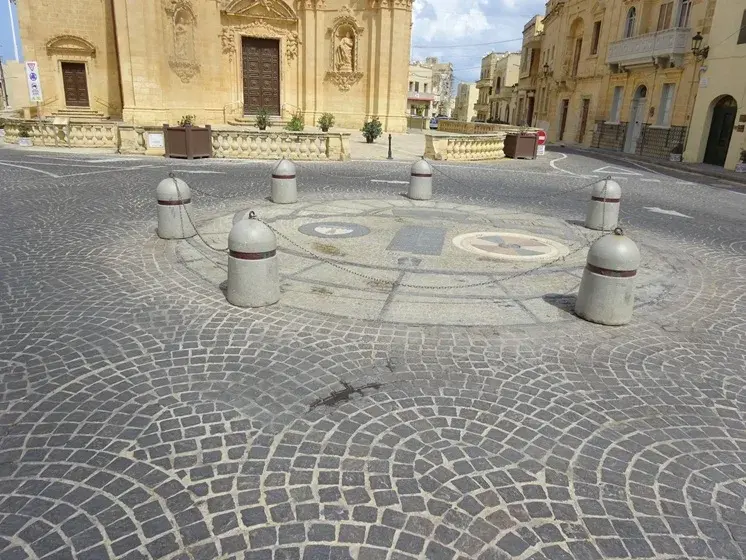
Many visitors walk across the church square without realising that the circular stone feature in front of the Church of the Visitation is actually a modern sundial incorporated into the paving during the restoration of Pjazza taż-Żjara tal-Madonna.

The sundial formed part of a major conservation project completed in 2012, which included new limestone paving, upgraded underground services, restoration of the historic village cross and improvements to the public square. When the sun shines, the shadow indicates the approximate time of day, making the square both decorative and functional. A coloured water jet with LED lighting was also incorporated into the design as part of the restoration project.

Today the sundial has become one of the small but distinctive details that many visitors overlook while photographing the impressive Baroque façade of the parish church.

Stone sundial in front of the Church of the Visitation in Għarb, Gozo  The stone sundial in Pjazza taż-Żjara tal-Madonna was installed during the 2012 restoration of the village square.  The circular stone sundial forms part of the restored village square in front of the Church of the Visitation of Our Lady in Għarb, Gozo. It was installed during the 2012 restoration project and functions as both a decorative feature and a working sundial.

Għarb Folklore Museum

Located in the village square, the museum occupies a historic house and contains a broad collection associated with domestic life, rural work, crafts and traditional tools. It is the most natural companion attraction to the church.

Suggested internal link
https://maltaguide.pro/gharb-folklore-museum-gozo.html

Ta’ Pinu National Shrine

The famous sanctuary stands in open countryside outside Għarb. It is one of Malta’s principal pilgrimage destinations and can be reached quickly by car, bus or a longer walk.

Ta’ Għammar Hill and the Way of the Cross

Opposite Ta’ Pinu, a series of sculptural stations leads up Ta’ Għammar Hill. The route provides religious interest and wide views over western Gozo. It is exposed to sun and wind, so bring water and avoid the hottest part of summer days.

Dwejra Bay

Dwejra is one of Gozo’s most dramatic natural areas, known for the Inland Sea, Fungus Rock, coastal cliffs, diving and the former Azure Window site.

San Dimitri Chapel

The rural Chapel of San Dimitri is linked with one of Gozo’s best-known legends. It is reached through the countryside north-west of Għarb and is rewarding for walkers, cyclists and visitors interested in local folklore.

Taż-Żejt, the old parish church

Before the present church became the parish centre, the smaller church now known as Taż-Żejt played an important role in Għarb’s religious history. It stands near the cemetery and is connected with a local legend concerning healing oil.

Għarb village streets

Walk beyond the main square to see old farmhouses, stone balconies, niches, quiet lanes and rural views. The village rewards unhurried exploration and offers a more authentic atmosphere than a quick photograph from a tour vehicle.

Suggested itineraries


One-hour visit

1. Photograph the church façade from the opposite side of the square.
2. Read the information panel.
3. Enter the church quietly if it is open.
4. Examine the titular painting, side altars and dome.
5. Walk around the square and historic cross.

Two-hour Għarb visit

1. Visit the Church of the Visitation.
2. Explore the Għarb Folklore Museum.
3. Walk through the old village streets.
4. Continue to the old parish church of Taż-Żejt.

Half-day western Gozo route

1. Church of the Visitation in Għarb.
2. Għarb Folklore Museum.
3. Ta’ Pinu National Shrine.
4. Ta’ Għammar Hill, depending on weather and mobility.
5. Dwejra Bay and the Inland Sea.

Full-day Gozo route

Morning:
Victoria and the Citadel.

Late morning:
Għarb and the Church of the Visitation.

Early afternoon:
Ta’ Pinu.

Late afternoon:
Dwejra Bay.

Evening:
Xlendi or Marsalforn, depending on your accommodation and transport.

Book a Gozo tour

There is no admission ticket required for the Church of the Visitation. The most relevant bookable products are therefore full-day Gozo tours that visit western Gozo, Ta’ Pinu, Dwejra or traditional villages.


Important editorial rule
Never state that a tour stops at the Church of the Visitation unless the current activity description explicitly confirms it. Itineraries can change. Instead use wording such as:
“These tours explore Gozo and may visit nearby western Gozo highlights. Check the current itinerary before booking if Għarb parish church is essential to your plans.”

Gozo full-day guided tour from Malta

Suitable for visitors who want transport, a guide and a structured overview of Gozo.

View this guided Gozo day tour. Explore Gozo on a guided day trip from Malta, with transport and visits to several major island highlights. Check the latest itinerary, languages and collection point before booking.

Gozo tours visiting Ta’ Pinu and western Gozo


Compare jeep, UTV, buggy, boat-and-bus and sightseeing tours that include Ta’ Pinu or other attractions in western Gozo. Because routes vary, check whether the tour allows enough time for a separate visit to Għarb village.

General Gozo activities

See all Gozo tours and activities


Which type of Gozo tour should you choose?


Guided coach tour
Best for travellers who prefer a fixed programme, commentary and straightforward transport.

Jeep, UTV or buggy tour
Best for travellers who want an active day and access to countryside viewpoints. Ride comfort and dust levels vary.

Private Gozo tour
Best for travellers who want to request a dedicated stop in Għarb and spend more time inside the church.

Boat-and-bus combination
Best for visitors who want to combine Gozo sightseeing with coastal views or Comino. These tours generally allow less time at individual churches.

Self-guided visit
Best for architecture enthusiasts, photographers and travellers who want to combine Għarb with the folklore museum and old parish church.

Affiliate disclosure

“Some links on this page are affiliate links. If you make a booking through one of these links, MaltaGuide.pro may receive a commission at no additional cost to you. This helps support the creation and maintenance of our independent Malta visitor guides.”

EXTERNAL LINKS


Include Għarb in your Gozo itinerary

The Church of the Visitation is easy to combine with Ta’ Pinu, Dwejra and other western Gozo attractions, yet it offers something different from each of them. Here you can experience a monumental baroque parish church within the intimate setting of a traditional village square.

Allow enough time to step inside, observe the building respectfully and explore the surrounding streets. Visitors who do so will discover that Għarb is much more than a waypoint on the road to Gozo’s better-known attractions.

Frequently Asked Questions


What is the Church of the Visitation of Our Lady in Għarb?

It is the Roman Catholic parish church of Għarb in western Gozo. The church is dedicated to the biblical Visitation of the Virgin Mary to Saint Elizabeth and is known for its baroque façade and twin bell towers.

Where is the church located?

The church stands in the main village square of Għarb, Gozo, Malta, at approximately 36.06028, 14.20889.

Is Għarb Parish Church the same as Ta’ Pinu Basilica?

No. Għarb Parish Church stands in the village centre and is dedicated to the Visitation. Ta’ Pinu is a separate national shrine situated in open countryside outside the village.

Is there an entrance fee?

Entry is normally free. Visitors may leave a voluntary donation towards the maintenance of the church.

Do I need to book a ticket?

No ticket is normally required. A booking is only needed for a commercial guided tour or transport service.

When was Għarb established as a parish?

Għarb was declared a separate parish on 29 August 1679 by Bishop Michele Girolamo Molina.

When was the present church built?

The present church was planned at the end of the seventeenth century and built during the early eighteenth century. Sources commonly place its construction between about 1699 and 1729 or 1732.

When was the church consecrated?

The church was consecrated on 28 September 1755.

Who designed the church?

The design is traditionally attributed to the Maltese architect Ġużeppi Azzopardi, known as Iż-Żgħir.

Why is the façade unusual?

Its central section curves inwards, producing a concave baroque façade with strong depth, movement and shadow.

Why is it compared with a church in Rome?

The composition has often been compared with Sant’Agnese in Agone in Piazza Navona because of its curved baroque frontage and flanking towers.

Who painted the titular painting?

The titular painting of the Visitation is attributed to the Maltese baroque painter Francesco Zahra.

What does the Visitation represent?

It represents Mary’s visit to her relative Elizabeth, as described in the Gospel of Luke.

What is the Maltese name for the dedication?

The dedication is commonly known in Maltese as Iż-Żjara tal-Madonna.

When is the religious feast day?

The liturgical feast of the Visitation is celebrated on 31 May.

When is the village festa?

The main outdoor celebrations are normally held during the first weekend of July. Confirm the current programme locally because dates and arrangements can change.

Can tourists enter during Mass?

Visitors should avoid sightseeing during Mass. Those who enter should remain quiet at the rear and behave respectfully.

What should I wear?

Wear clothing suitable for an active Catholic church. Cover shoulders and upper legs and remove hats.

Is photography allowed?

Photography is often acceptable outside services, but visitors should observe notices, avoid flash and never photograph worshippers without consent.

Can I use a tripod?

A tripod may obstruct worshippers and should not be used without permission.

How long does a visit take?

Allow 20 to 40 minutes for the church and square. A longer village visit including the folklore museum can take two hours or more.

What is the best time to visit?

Weekday mornings are often peaceful. Check Mass times and avoid arriving during a funeral, wedding or service if your purpose is sightseeing.

Is the church always open?

No. It is an active parish church rather than a museum and may close between services or during private preparations.

What are the Mass times?

Typical schedules include early-morning weekday Masses and an evening service, with several Sunday Masses. Seasonal schedules vary, so check directly with the parish or the official Malta Mass-time service.

What is the parish telephone number?

The published parish telephone number is +356 2155 6129.

Is the church wheelchair accessible?

The main approach has steps. Alternative access may be possible, but visitors requiring step-free entry should contact the parish before travelling.

Are public toilets available?

The church should not be expected to provide visitor toilets. Facilities may be available in nearby businesses or attractions.

Is parking available?

Limited street parking may be found in nearby roads. Parking becomes more difficult during services, weddings, funerals and feast celebrations.

Can I reach Għarb by bus?

Yes. Services run from Victoria towards western Gozo, but route numbers and timetables can change. Use the official Malta Public Transport journey planner.

How far is Għarb from Victoria?

The drive is usually around 10 to 15 minutes outside peak traffic.

Can I walk from Ta’ Pinu to Għarb church?

Yes, but the route includes roads without continuous pavements. Use a reliable map, wear suitable footwear and avoid extreme heat.

What else is in the village square?

The square includes traditional buildings, a historic cross and the Għarb Folklore Museum.

What can I combine with this church?

Popular combinations include the Għarb Folklore Museum, Ta’ Pinu, Ta’ Għammar Hill, Dwejra Bay, San Dimitri Chapel and the old parish church of Taż-Żejt.

What is Taż-Żejt?

Taż-Żejt is the old parish church near Għarb cemetery. It is connected with a local legend involving healing oil.

Is the church suitable for children?

Yes, provided children remain quiet and supervised. The square and nearby museum can make the visit more varied.

Is the church worth visiting without a guide?

Yes. The façade and square are easy to appreciate independently, although a knowledgeable guide can add context about architecture, paintings and parish history.

Are guided tours available?

Some Gozo tours pass through or near western villages, while private guides can include Għarb on request. Always check the current itinerary before booking.

Does GetYourGuide sell a church entrance ticket?

Normally no entrance ticket is required. GetYourGuide is more useful for finding Gozo sightseeing, jeep, UTV, buggy and private tours.

Can I attend the village festa?

Yes. Visitors are welcome, but should respect religious events, expect road closures and arrive early because parking and public transport can be busy.

Are drones allowed near the church?

Drone use is subject to Maltese and EU aviation rules and may require authorisation. Flying over crowds or near buildings without proper permission is not acceptable.

What is the best photo angle?

A view from the opposite side of the square captures the full façade, while a diagonal angle best reveals its concave curve.

Why is the church important to Għarb?

It is the centre of parish worship, a major architectural landmark and a visible symbol of Għarb’s identity since the village became a parish in 1679.

Can I visit the church and Dwejra on the same day?

Yes. Għarb, Ta’ Pinu and Dwejra form a practical western Gozo route.

Is food available nearby?

A limited selection of cafés or small businesses may operate in and around the village. Opening hours can vary, so carry water and do not rely on late service.

What language are services held in?

Most parish services are conducted in Maltese.

Is there a dress code during summer?

Yes. Hot weather does not remove the expectation of modest dress inside the church. Carry a light cover for shoulders if needed.

May I light a candle?

Where candles are provided and the area is open, visitors may normally light one and leave the suggested donation.

What should I do if a funeral or wedding is taking place?

Do not enter for sightseeing. Return later or limit your visit to the exterior and village square.

Is the church a basilica?

The parish church has been granted the dignity of a minor basilica and is also associated with collegiate and archpresbyteral status.

How can I verify current information?

Check with Għarb parish, the official Malta Mass-time service, Għarb Local Council and Malta Public Transport before making a special journey.

Frequently Asked Questions

What is the Church of the Visitation of Our Lady in Għarb?

The Church of the Visitation of Our Lady is the Roman Catholic parish church of Għarb in western Gozo. It is dedicated to the biblical meeting between the Virgin Mary and Saint Elizabeth. The church is also known for its highly distinctive baroque façade, twin bell towers and prominent position on the traditional village square.

Where exactly is the church located?

The church stands in the main square of Għarb, in the western part of Gozo. It is easy to recognise because its tall façade and bell towers dominate the village centre. The square also contains traditional limestone buildings, a historic cross and the Għarb Folklore Museum.

Is Għarb Parish Church the same as Ta’ Pinu Basilica?

No. They are two separate churches. The Church of the Visitation is the parish church in the centre of Għarb, while the Basilica of the National Shrine of the Blessed Virgin of Ta’ Pinu stands in open countryside outside the village. Both are important religious buildings, but they have different histories, architecture and functions.

Is there an entrance fee to visit the church?

Entry is normally free. The church is an active place of worship rather than a ticketed museum. Visitors may leave a voluntary donation to help with maintenance, restoration, lighting and parish expenses.

Do I need to reserve a ticket or time slot?

No reservation is normally required for an independent visit. A booking is only necessary when you join a commercial Gozo tour, hire a private guide or arrange a group visit requiring special access.

When did Għarb become a parish?

Għarb became a separate parish in 1679. The decision was taken by Bishop Michele Girolamo Molina after the growing rural community requested its own parish because of the distance from the principal church in Victoria.

Who was Bishop Michele Girolamo Molina?

Bishop Michele Girolamo Molina was the Bishop of Malta who established Għarb as a separate parish in 1679. A monument beside the church commemorates his role in the religious and civic development of the village.

When was the present church built?

The present church was planned at the end of the seventeenth century and built during the early eighteenth century. Different sources give slightly different completion dates because major churches were often opened, furnished and decorated in stages. The building was solemnly consecrated in 1755.

Who designed the Church of the Visitation?

The design is traditionally attributed to the Maltese architect Ġużeppi Azzopardi, known as Iż-Żgħir. He is associated with the church’s monumental baroque appearance and its unusual curved façade.

When was the church consecrated?

The Church of the Visitation was consecrated on 28 September 1755. Consecration is the formal dedication of a church for sacred use and is an important date in the history of a parish building.

Why is the façade considered unusual?

The central part of the façade curves inwards rather than forming a flat wall. This concave design creates movement, depth and dramatic shadows. It also makes the church appear to embrace the village square and directs attention towards the main entrance.

Why is the church compared with Sant’Agnese in Agone in Rome?

The façade is often compared with Sant’Agnese in Agone in Piazza Navona because both use a curved baroque composition framed by towers. The comparison refers to the visual resemblance and baroque character; it should not be interpreted as proof that the Għarb church is an exact copy.

What architectural style is the church?

The church is predominantly baroque. Its theatrical façade, curved central section, twin towers, sculptural details and emphasis on movement are characteristic of baroque church architecture.

What kind of stone was used?

Like many historic buildings in Malta and Gozo, the church was built from local limestone. The stone changes colour throughout the day, appearing pale in strong sunlight and warmer or honey-coloured near sunset.

Does the church have two bell towers?

Yes. Twin bell towers rise on either side of the central façade. They provide balance, make the church visible from surrounding streets and reinforce its role as the visual centre of the village.

Does the church have a dome?

Yes. The dome is an important feature of both the church interior and the Għarb skyline. Inside, it helps direct the eye upwards and contributes to the monumental atmosphere of the building.

What is the principal artwork inside the church?

The principal or titular painting represents the Visitation of the Virgin Mary to Saint Elizabeth. It forms the artistic focus of the church’s dedication and is traditionally attributed to Francesco Zahra.

Who was Francesco Zahra?

Francesco Zahra was one of eighteenth-century Malta’s most important baroque painters. His religious works can be found in several Maltese churches, and the titular painting in Għarb is traditionally associated with him.

What does the Visitation mean in Christianity?

The Visitation refers to Mary’s visit to her relative Elizabeth, as described in the Gospel of Luke. The event is associated with faith, service, humility and joy. It is also connected with the Magnificat, Mary’s song of praise.

What is the Maltese name of the church’s dedication?

The dedication is commonly known in Maltese as Iż-Żjara tal-Madonna, meaning the Visitation of Our Lady.

Are there side altars inside the church?

Yes. The church contains side altars and devotional artworks reflecting the wider religious life of the parish. Visitors should walk slowly around the interior and look for paintings, statues, carved stone, gilding, inscriptions and liturgical furnishings.

Is there a processional statue?

Yes. As in many Gozitan parishes, the annual festa centres on a processional statue connected with the church’s dedication. The statue is carried through decorated streets during the religious procession.

Who created the processional statue?

University of Malta records identify the Għarb processional statue of the Visitation with the sculptor Giuseppe Maria Vella, also known as Mastru Pepp. Visitors should avoid touching the statue or its display.

When is the liturgical feast of the Visitation?

The liturgical feast is celebrated on 31 May. This is the official date in the Church calendar for the Visitation of the Virgin Mary.

When is the Għarb village festa?

The principal outdoor festivities are normally held during the first weekend of July. Dates and programmes can vary, so visitors should check the current parish or Visit Gozo information before travelling specifically for the festa.

What happens during the festa?

The village is decorated with banners, lights, statues and street ornaments. The programme usually includes religious services, a procession, music and public celebrations. Għarb is also known for an infiorata tradition in which decorative flower-petal designs may be created in the streets.

Can visitors attend the festa?

Yes. Visitors are welcome, but the event is both a religious celebration and a community tradition. Dress respectfully, do not obstruct the procession, follow police instructions and expect road closures, crowds and limited parking.

Is the church open every day?

The church is generally accessible around Masses and parish activities, but it does not operate like a museum with guaranteed continuous opening hours. It may close between services or during cleaning, weddings, funerals and private preparations.

What are the current opening hours?

There are no dependable all-day museum-style opening hours. Access is usually linked to Mass times and parish activities. For a special journey, confirm directly with the parish or check the official Malta church Mass-time service.

What are the Mass times?

Mass schedules vary between weekdays, Sundays, summer, winter and special celebrations. Early-morning and evening services are common, with several Sunday Masses. Always check the current official schedule because published times can change.

Can tourists enter during Mass?

Visitors may attend Mass respectfully, but sightseeing should stop while a service is taking place. Remain quiet, avoid walking around, switch off mobile phone sounds and do not take photographs.

What should visitors wear?

The church is an active Roman Catholic place of worship. Shoulders and upper legs should be covered, hats should be removed and clothing should be suitable for a sacred building. Carrying a light shoulder cover is useful during summer.

Is photography allowed inside?

Photography is usually acceptable when no service is taking place, provided there are no signs prohibiting it. Avoid flash, do not photograph worshippers without permission and never enter restricted areas for a better angle.

May I use a tripod?

A tripod can obstruct aisles and disturb worshippers. Do not use one without explicit permission from the parish. Hand-held photography or a discreetly stabilised camera is more appropriate.

What is the best exterior photography viewpoint?

Stand on the opposite side of the square to capture the full façade, steps and bell towers. A diagonal viewpoint is especially useful because it reveals the depth of the concave façade more clearly than a straight frontal photograph.

What is the best time of day for photography?

Morning often provides a quieter square, while late-afternoon light can warm the limestone and emphasise carved details. Light conditions vary by season, so photographers may benefit from returning at different times.

How long should I allow for a visit?

Allow approximately 20 to 40 minutes for the church and square. A visit of two hours or more is appropriate when combined with the Għarb Folklore Museum, village streets or nearby chapels.

Is the church wheelchair accessible?

The principal approach includes a broad staircase. Alternative access may be possible, but conditions can change. Visitors requiring step-free access should contact the parish in advance rather than assuming that every part of the building is accessible.

Are public toilets available?

The church is not a visitor centre and should not be expected to provide public toilets. Facilities may be available in nearby cafés, museums or other visitor attractions, depending on their opening hours.

Is parking available near the church?

Limited street parking may be available in nearby roads. Spaces close to the square are often scarce during Masses, weddings, funerals and the festa. Park legally and do not block garages, doorways or emergency access.

Can I reach the church by public bus?

Yes. Għarb is connected with Victoria by Malta Public Transport. Route numbers and timetables can change, so use the official journey planner shortly before travelling.

How far is Għarb from Victoria?

The drive from Victoria usually takes around 10 to 15 minutes outside busy periods. Public transport takes longer because of stops, waiting time and possible connections.

Can I walk from Ta’ Pinu to Għarb Parish Church?

Yes, the two sites are close enough for many visitors to walk between them. However, parts of the route may have narrow or missing pavements. Wear suitable footwear, carry water and avoid the hottest hours in summer.

What can I visit in the same square?

The Għarb Folklore Museum is located in the village square and is the most convenient attraction to combine with the church. The square itself is also worth exploring for its historic cross and traditional Gozitan architecture.

What other attractions are near the church?

Nearby attractions include Ta’ Pinu National Shrine, Ta’ Għammar Hill and its Way of the Cross, Dwejra Bay, San Dimitri Chapel, Taż-Żejt old parish church and the rural lanes around Għarb.

What is Taż-Żejt?

Taż-Żejt is an older church in Għarb associated with the Visitation and with a well-known local legend concerning oil and miraculous favours. It forms part of the wider religious history of the village.

Can I combine the church with Dwejra Bay?

Yes. Għarb, Ta’ Pinu and Dwejra form a practical western Gozo itinerary. Visiting the church first and continuing to Ta’ Pinu and Dwejra works especially well for travellers with a car or private guide.

Are guided tours available?

Many Gozo tours visit western Gozo, Ta’ Pinu or Dwejra, but not all stop in the centre of Għarb. Check the current itinerary carefully and choose a private tour when a dedicated church visit is important.

Does GetYourGuide sell an entrance ticket for the church?

Normally no entrance ticket is needed. GetYourGuide is more useful for booking full-day Gozo tours, private sightseeing, jeep tours, UTV tours, buggy tours and combined boat-and-land excursions.

Can I bring children?

Yes. Children are welcome when supervised and able to remain quiet. Combining the church with the folklore museum and a short village walk can make the visit more varied for families.

Are pets allowed inside?

Pets should not normally be taken inside an active church. Assistance dogs are a different matter. For any special requirement, contact the parish before visiting.

May visitors light a candle?

Where candles are provided and the area is open, visitors may normally light one and leave the suggested donation. Follow any instructions and never place personal candles or objects in unauthorised locations.

Are weddings and funerals held here?

Yes. The church is a working parish church and is used for weddings, funerals, baptisms and other ceremonies. Sightseeing visitors should not enter or photograph a private service.

Can drones be used near the church?

Drone use is regulated under Maltese and European aviation rules. Flights over crowds, near buildings or during the festa may be prohibited or require authorisation. Never launch a drone without checking current legal and safety requirements.

Is the church suitable for a quiet visit?

Yes, particularly on weekday mornings outside service times. The atmosphere can be very peaceful, but access and quietness depend on parish activities, funerals, weddings and feast preparations.

Why is the church important to the identity of Għarb?

The church is the spiritual, architectural and social centre of the village. Its history is closely linked with Għarb becoming a parish in 1679, and its façade remains the dominant feature of the main square.

Is the Church of the Visitation worth visiting?

Yes. It combines one of Gozo’s most memorable baroque façades with an authentic village setting, active religious life and easy access to other major attractions in western Gozo.

What is the best way to verify current visitor information?

Check the official Malta Mass-time service, the Għarb parish or local council, Malta Public Transport and current Visit Gozo information. Opening times, Mass schedules, feast programmes, road closures and tour itineraries can all change.

Back to content
This website uses cookies and external links for visitor information and affiliate bookings. By using this website, you agree to our Privacy Policy, Cookie Policy and Terms & Conditions.