As a resident of Malta, I travel to Gozo regularly. It is wonderful to visit the Dwejra Bay area, take a leisurely walk, and enjoy everything this special area has to offer.
For many years, Dwejra was best known as the home of the Azure Window, the enormous natural limestone arch that became one of Malta's most recognisable landmarks. Although the arch collapsed during a storm on 8 March 2017, Dwejra remains one of the most rewarding places to visit in the Maltese Islands.
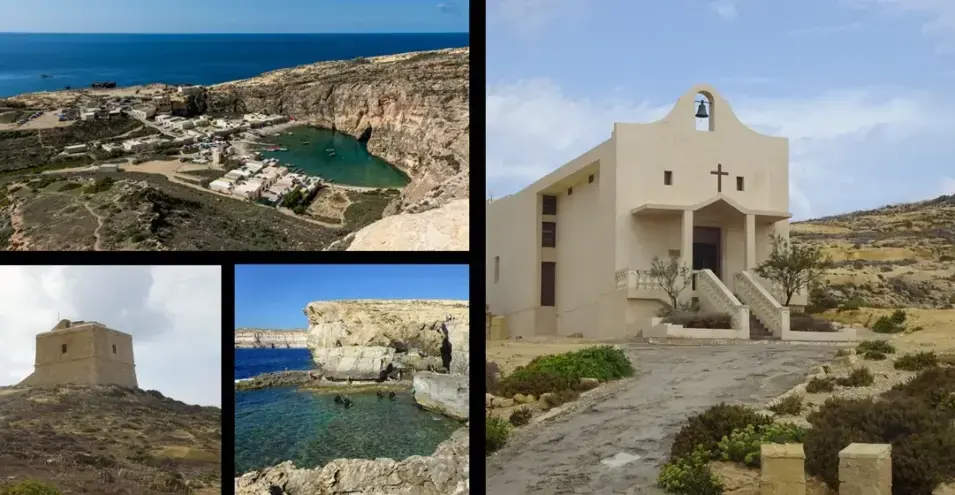
The former Azure Window site is only one part of the landscape. Visitors can also see Fungus Rock, Dwejra Tower, St Anne's Chapel, protected coastal habitats and millions of years of geological history.
This page concentrates on the land-based attractions, history, walking routes, viewpoints and practical visitor information at Dwejra Bay. Swimming, diving, snorkelling, the Blue Hole, the Inland Sea and boat trips are covered separately in the Dwejra Bay water activities guide.
Discover Dwejra with a Guided Tour
Dwejra is included in many organised sightseeing tours of Gozo. These excursions are convenient for visitors staying on Malta or for anyone who prefers not to arrange transport independently.
Depending on the selected itinerary, a tour may combine Dwejra with the Citadel in Victoria, Ta' Pinu Basilica, Xlendi Bay and traditional Gozitan villages.
Available tour types may include Gozo UTV tours, quad bike tours, jeep tours, buggy tours and tuk-tuk tours.
Always check the individual product description carefully because the time spent at Dwejra and the other included attractions can vary.
Where Is Dwejra Bay?
Dwejra Bay is situated on the western coast of Gozo, close to the villages of San Lawrenz and Għarb. It lies approximately five kilometres from Victoria, also known as Rabat, the capital of Gozo.
The landscape feels remote and unspoilt, even though it is easily reached by road. From Victoria, the journey normally takes approximately 10 to 15 minutes by car.
Visitors arriving from Malta generally travel to Gozo by ferry and then continue from Mġarr Harbour across the island. Dwejra is signposted from Victoria and San Lawrenz.
Why Visit Dwejra Bay?
Dwejra is much more than the location of the former Azure Window. The area brings together natural scenery, geology, history, wildlife and cultural heritage within one relatively compact landscape.
Reasons to visit include the former Azure Window viewpoint, Fungus Rock, Dwejra Tower, St Anne's Chapel, spectacular coastal cliffs, geological formations, Natura 2000 habitats, walking routes, sunset views, photography and Game of Thrones filming history.
Dwejra can be enjoyed during a short sightseeing stop, but visitors who enjoy walking, photography or geology should allow considerably more time.
History of Dwejra Bay
Dwejra's history has always been closely connected to its unusual landscape and exposed coastal position.
For centuries, local people used the surrounding countryside for agriculture, fishing, salt production and the collection of natural resources. The cliffs also formed part of Gozo's coastal defence system during the period of the Knights of St John.
The Knights placed great importance on Fungus Rock because a rare plant growing there was believed to possess medicinal properties. Access to the rock was strictly controlled, and Dwejra Tower was built nearby during the seventeenth century to watch over the coast and protect this valuable site.
During later centuries, Dwejra became increasingly known for its natural beauty. The Azure Window attracted artists, photographers, filmmakers and visitors from around the world.
Following the collapse of the Azure Window in 2017, international attention once again focused on Dwejra. The disappearance of the arch demonstrated how even the most impressive natural landmarks remain vulnerable to erosion and powerful winter storms.
How Dwejra Bay Was Formed
The remarkable landscape of Dwejra developed over millions of years through the interaction of geology, rainfall, underground water and the Mediterranean Sea.
Gozo is largely composed of sedimentary limestone formed from material deposited in ancient seas. Different limestone layers vary in hardness and resistance. Softer layers erode more quickly, while harder layers may remain as cliffs, ledges, arches and isolated rocks.
Natural cracks in the limestone were gradually widened by rainwater, chemical weathering, wave action, salt crystallisation, wind and changes in temperature.
These processes created Dwejra's cliffs, caves, rock platforms, the Inland Sea, the Blue Hole, Fungus Rock and the former Azure Window.
The coastline continues to change today. Rockfalls, erosion and weathering are natural parts of this continuing geological process.
The Azure Window
The Azure Window was a large natural limestone arch that once stood on the coast at Dwejra. Its enormous opening framed the blue Mediterranean and made it one of the most photographed landmarks in Malta and Gozo.
The formation developed when erosion enlarged natural weaknesses within a coastal headland. Over time, a cave formed and eventually opened through the rock, creating the famous arch.
For generations, the Azure Window became a symbol of Gozo. It appeared in travel brochures, postcards, films, television productions and countless private photographs.
Visitors walked across the surrounding limestone plateau to admire the arch from different viewpoints. Concerns about erosion increased as cracks and rockfalls became more visible, and people were repeatedly warned not to walk on the upper surface of the arch.
The Collapse of the Azure Window – 8 March 2017
The Azure Window collapsed during a severe storm on the morning of 8 March 2017.
Powerful waves and strong winds struck the already weakened formation. The pillar supporting the arch gave way, and the entire upper section fell into the sea.
The collapse was so complete that no part of the arch remained above the water.
The loss caused sadness throughout Malta and Gozo and received international media attention. For local residents and regular visitors, the Azure Window had been part of the landscape for their entire lives.
Although the arch has disappeared, the viewpoint remains worth visiting. The exposed cliffs, open sea and dramatic limestone platform continue to create one of Gozo's most memorable coastal scenes.
The fallen limestone blocks now form part of the underwater landscape and are explored by qualified divers. Diving and the Azure Reef are covered in the separate Dwejra water activities guide.
Dwejra Bay in Film and Television
Dwejra's unusual coastline has attracted film and television productions because it offers a dramatic natural setting with very little modern development visible in the surrounding landscape.
The best-known production associated with Dwejra is Game of Thrones.
The Azure Window and the surrounding limestone scenery appeared during the wedding of Daenerys Targaryen and Khal Drogo in the first episode of the television series.
Although the Azure Window no longer exists, visitors can still stand in the general area used for filming and recognise the surrounding cliffs and coastal landscape.
Dwejra has also appeared in other international productions, documentaries, advertisements and travel programmes. Its rugged appearance makes it suitable for historical, fantasy and adventure settings.
Fungus Rock – The Legendary Island of the Knights
Fungus Rock is a large isolated limestone islet rising from the sea at the entrance to Dwejra Bay.
The rock is known in Maltese as Il-Ġebla tal-Ġeneral, meaning the General's Rock. Its history is connected to a strange parasitic plant called Cynomorium coccineum, traditionally known as the Maltese Fungus.
Despite its common name, the plant is not a fungus. It is a parasitic flowering plant with a dark reddish-brown appearance.
The Knights of St John believed that the plant possessed powerful medicinal properties. It was reportedly used in preparations intended to treat bleeding, infections and other illnesses.
Because the plant was considered extremely valuable, access to Fungus Rock was strictly controlled. Unauthorised collection could result in severe punishment.
A system involving a rope and suspended basket was once used to reach the rock from the mainland. This allowed authorised people to cross the gap and collect the plant.
Today, Fungus Rock is protected for its natural and historical significance. Visitors should admire it from the mainland viewpoints and must not attempt to climb or land on it.
Excellent views are available from the paths around Dwejra Tower and from elevated positions overlooking the bay.
Dwejra Tower – Guarding Gozo's Wild Coast Since 1652
Dwejra Tower is a historic coastal watchtower overlooking the bay and Fungus Rock.
The tower was built in 1652 during the rule of the Knights of St John. Its strategic position allowed guards to observe the western coastline and watch for approaching enemy ships, corsairs and unauthorised attempts to reach Fungus Rock.
The square limestone structure was designed for defence. Like many Maltese coastal towers of the period, its original entrance was raised above ground level and could be reached using a removable ladder or external access arrangement.
The tower was equipped with weapons and formed part of the wider network of coastal defences around Malta and Gozo.
During later periods, Dwejra Tower continued to serve different military and observation purposes. It eventually fell into disrepair but was restored through the efforts of Din l-Art Ħelwa.
The tower may be opened by volunteers on selected days. Opening depends on volunteer availability and local arrangements, so visitors should check current information before travelling specifically to see the interior.
Even when closed, the exterior and surrounding viewpoint are well worth visiting. The elevated position provides excellent views towards Fungus Rock, the cliffs and the open Mediterranean.
St Anne's Chapel – A Peaceful Landmark by Dwejra Bay
St Anne's Chapel is a small limestone chapel close to the main visitor area at Dwejra.
The modest building provides a peaceful contrast to the dramatic cliffs and exposed coastline surrounding it. Its traditional design reflects the importance of small countryside chapels within Maltese and Gozitan religious life.
The chapel was designed by Joseph Mizzi of San Lawrenz and was blessed on 25 July 1963.
Visitors may find the chapel closed, as it does not necessarily maintain regular daily opening hours. The exterior can still be viewed, and its position makes it an attractive stop while walking between the main Dwejra landmarks.
Please behave respectfully around the chapel and avoid obstructing the entrance.
The Geology of Dwejra Bay – A Landscape Millions of Years in the Making
Dwejra is one of the most interesting places in Gozo for observing the natural behaviour of limestone.
The visible rock layers were originally formed from sediment deposited in ancient marine environments. Over millions of years, this material hardened into the limestone that now forms the Maltese Islands.
The coastline displays the effects of differential erosion. Harder limestone layers resist weathering for longer, while softer layers are removed more quickly.
This difference helped create cliffs, natural caves, rock ledges, wave-cut platforms, sea tunnels, sinkholes, isolated islets and natural arches.
The former Azure Window represented one stage within this process. A cave developed through the coastal rock, enlarged into an arch and eventually collapsed.
Fungus Rock is another result of erosion. It is a remaining block of limestone that became separated from the mainland as the surrounding rock was worn away.
Visitors should remember that apparently solid cliffs may contain cracks or unstable edges. Never stand directly beneath overhanging rock or cross barriers to approach a cliff edge.
Natura 2000 – Protecting One of Europe's Most Valuable Coastal Landscapes
Dwejra forms part of the European Natura 2000 network of protected natural areas.
The designation recognises the importance of its coastal habitats, cliffs, native plants, geological formations, birds and marine environment.
The protected landscape may appear barren at first sight, particularly during the dry summer months. However, the limestone supports specialised plants that are adapted to salt spray, strong wind, shallow soil and intense sunshine.
The cliffs and surrounding countryside also provide habitat for resident and migratory birds.
Visitors should remain on established paths where possible, avoid trampling vegetation, never remove plants, rocks or fossils, take all rubbish away, keep dogs under control, avoid excessive noise and respect signs and barriers.
Drone flying is not freely permitted. Do not fly a drone unless all licences, insurance, authorisations and permissions required in Malta and for Dwejra have been obtained.
Protection does not mean that visitors cannot enjoy Dwejra. It means that everyone should explore the area carefully so that its natural character is preserved.
Walking Around Dwejra Bay
Walking is the best way to appreciate the different land-based attractions at Dwejra.
The main landmarks are relatively close together, but the terrain consists largely of natural limestone, gravel and uneven paths. Comfortable closed shoes with a good grip are preferable to sandals or flip-flops.
A practical walking route can include the main parking area, St Anne's Chapel, the former Azure Window viewpoint, views towards the Blue Hole, the coastal limestone platform, Dwejra Tower, Fungus Rock viewpoints and elevated paths overlooking the bay.
Visitors should allow at least one to two hours for a relaxed walk with photography stops.
Experienced walkers may continue farther along the coast, but they should carry water, use reliable navigation and remain well away from unstable cliff edges.
There is little natural shade. During summer, walking is most comfortable early in the morning or later in the afternoon.
After rain, smooth limestone can become slippery. During strong winds or rough seas, avoid exposed platforms and areas close to the cliff edge.
Never assume that a path is safe simply because other visitors are using it.
Photography at Dwejra Bay – The Best Photo Spots in Gozo
Few places in Malta offer as many spectacular photography opportunities as Dwejra Bay. With its dramatic limestone cliffs, historic landmarks, panoramic sea views and constantly changing light, the area has become one of Gozo's favourite destinations for amateur and professional photographers.
Every season and every hour of the day creates a different atmosphere. Calm summer mornings produce clear Mediterranean views, while winter storms transform the coastline into a dramatic display of crashing waves and powerful seas.
Whether you are using a professional camera or a smartphone, Dwejra offers memorable images in every direction.
The Former Azure Window Viewpoint
The most famous viewpoint remains the location where the Azure Window once stood.
Although the natural arch disappeared in 2017, the viewpoint continues to attract photographers. The dramatic cliffs, open sea and rugged coastline create an impressive composition that reflects the raw beauty of western Gozo.
Many visitors recreate historic photographs by standing at the same viewpoint where millions of people once photographed the famous arch.
Fungus Rock
Fungus Rock is one of Dwejra's most photogenic landmarks.
The isolated limestone island rises dramatically from the sea, creating a striking focal point against the blue Mediterranean. Depending on the position of the sun, the limestone changes colour from pale cream to rich golden tones.
The best photographs are usually taken from elevated viewpoints near Dwejra Tower or from the coastal paths surrounding the bay.
Dwejra Tower
The area around Dwejra Tower provides one of the finest panoramic views on Gozo.
From this elevated position, photographers can capture Fungus Rock, the former Azure Window site, the rugged western cliffs, St Anne's Chapel, the open Mediterranean Sea and the surrounding countryside.
Dramatic Cliff Views
Walking along the western cliffs reveals countless opportunities for landscape photography.
The limestone formations, natural fissures and wave-cut platforms create constantly changing compositions. During rough weather, waves crashing against the cliffs add movement and drama.
Always remain well back from exposed edges. Waves can travel farther across rock platforms than expected.
Sunrise Photography
Although Dwejra faces west, sunrise still offers attractive photographic opportunities.
The early morning light softly illuminates parts of the limestone landscape while the area is usually much quieter than later in the day.
Morning light is especially suitable for photographing details of the landscape, historic buildings and geological formations.
Sunset – The Golden Hour
Sunset is widely regarded as the finest time to photograph Dwejra Bay.
As the sun descends over the Mediterranean, the cliffs glow with golden and amber colours. Long shadows emphasise the rugged textures of the limestone, while the sea reflects shades of orange, pink and deep blue.
On clear evenings, the sun appears to sink directly into the Mediterranean.
Sunset attracts many visitors, so allow extra time for parking and choose a safe viewpoint before the light begins to fade.
Night Photography
Dwejra can also be an excellent location for night photography.
The western coastline is relatively distant from Malta's brightest urban areas. On clear nights, photographers may capture stars above the Mediterranean and surrounding cliffs.
Bring a sturdy tripod, a torch and suitable footwear. Never walk close to cliff edges after dark.
Photography Tips
Arrive early for quieter conditions.
Visit again at sunset for dramatic colours.
Wear sturdy footwear.
Carry drinking water during summer.
Protect equipment from sea spray.
Respect safety barriers.
Never climb unstable cliffs for a photograph.
Respect wildlife and protected vegetation.
Do not fly a drone without all required permits and authorisations.
The best photographs are always taken safely and responsibly.
Best Time to Visit Dwejra Bay
Dwejra Bay can be visited throughout the year. Every season offers a different experience, from colourful spring landscapes and long summer evenings to dramatic winter seas and peaceful autumn sunsets.
Changes in weather, sea conditions and sunlight constantly transform the scenery.
Spring – March to May
Spring is one of the best periods for walking and sightseeing.
Temperatures are generally comfortable, the surrounding countryside is greener after winter rain and native wildflowers appear among the limestone.
Visitor numbers are normally lower than during the main summer season.
Summer – June to August
Summer brings long sunny days, intense light and very little rainfall.
Dwejra is exposed, with limited natural shade. Visit early in the morning or later in the afternoon to avoid the strongest heat.
Carry drinking water, wear a hat and use sunscreen.
July and August are usually the busiest months. Parking and the principal viewpoints can become crowded, particularly at weekends and around sunset.
Autumn – September to November
Autumn is an excellent season for exploring Gozo.
The intense summer heat gradually decreases, while softer sunlight creates attractive conditions for photography.
As the season progresses, storms and stronger winds become more likely. Check the weather before walking close to exposed sections of coast.
Winter – December to February
Winter reveals a completely different side of Dwejra.
Storms can generate spectacular waves that crash against the cliffs. These conditions attract photographers but can also be dangerous.
Remain far away from exposed rock platforms, cliff edges and areas affected by sea spray during strong winds or rough seas.
How Much Time Should You Allow?
Allow 30 to 45 minutes for the main viewpoint and photographs.
Allow one to two hours for the principal landmarks and a short walk.
Allow two to three hours for a relaxed visit with photography and time around Dwejra Tower and Fungus Rock.
Allow half a day for a more complete exploration of the landscape, history, geology and walking routes.
Avoiding the Crowds
Arrive before 9:00 a.m.
Visit later in the afternoon.
Travel during spring or autumn.
Avoid public holidays where possible.
Avoid the busiest sunset period during summer.
How to Get to Dwejra Bay
Dwejra Bay is relatively easy to reach from anywhere on Gozo.
It is located near San Lawrenz on the western coast of the island, approximately five kilometres from Victoria and approximately fourteen kilometres from Mġarr Harbour.
Visitors travelling from Malta normally cross to Gozo by ferry and continue to Dwejra by car, bus, taxi or organised tour.
By Car
Hiring a car provides the greatest flexibility.
From Victoria, follow signs towards San Lawrenz and Dwejra.
Approximate driving time from Victoria is 10 to 15 minutes.
Approximate driving time from Mġarr Harbour is 20 to 30 minutes, depending on traffic.
Take care on narrow village roads and observe local parking restrictions.
By Public Bus
Dwejra is served by public transport from Victoria.
Route numbers, departure times and frequencies can change. Check the current official Malta Public Transport timetable or journey planner before travelling.
Allow sufficient time for the return journey, particularly late in the day.
By Taxi or Ride-Hailing Service
Taxis and app-based transport services operate across Gozo.
This is convenient for visitors who do not wish to drive or wait for a bus.
Arrange a return journey in advance when visiting late in the day because immediate availability cannot always be guaranteed.
Organised Tours
Many visitors choose an organised Gozo excursion.
Popular tour styles include jeep tours, quad bike tours, buggy tours, tuk-tuk tours and UTV tours.
These often combine Dwejra with the Citadel, Ta' Pinu Basilica and other attractions.
Cycling
Experienced cyclists may enjoy the scenic roads leading to Dwejra.
Gozo is hilly, and summer heat can make cycling demanding. Carry sufficient water, wear a helmet and avoid the warmest part of the day.
Parking at Dwejra Bay
Parking is normally available close to the main visitor area.
The parking area provides convenient access to the former Azure Window viewpoint, Dwejra Tower, Fungus Rock viewpoints, St Anne's Chapel, the main walking paths and the Inland Sea area.
Parking arrangements and restrictions may change. Always check the signs displayed on arrival.
During July and August, weekends, public holidays and sunset periods, the area can become busy.
Do not block emergency access, private entrances, boat access, turning areas or pedestrian routes.
Accessible Parking and Mobility
Some areas close to the parking zone are easier to reach than the more distant coastal paths.
However, much of Dwejra consists of uneven limestone, gravel and natural rock. Full exploration can be difficult for wheelchair users or visitors with reduced mobility.
Conditions should be assessed on arrival because parked vehicles, weather and temporary works can affect accessibility.
Visitor Facilities
Dwejra is primarily a natural attraction, but useful visitor facilities are normally available in the wider area.
Public Toilets
Public toilet facilities may be available near the principal visitor area.
Opening and condition can vary according to maintenance, season and time of day.
Restaurants and Cafés
Cafés, restaurants and refreshment outlets normally operate near Dwejra and the Inland Sea.
Visitors may find cold drinks, coffee, ice cream, light meals, traditional dishes and seafood.
Opening hours can vary, especially outside the main tourism season. Carry drinking water even when you expect cafés to be open.
Information Panels
Information panels may explain the history, geology and environmental significance of Dwejra.
Topics can include the Azure Window, Fungus Rock, Dwejra Tower, geology, protected habitats and conservation.
Walking Paths
Visible paths connect many of the principal landmarks.
Most are not paved and may include uneven limestone, loose gravel and natural steps.
Wear suitable footwear and remain on established routes where possible.
Mobile Coverage
Mobile reception is generally available, but visitors should not depend entirely on a phone for navigation or emergencies.
Download required map information before setting out on a longer walk and make sure the battery is sufficiently charged.
Accessibility
The main landscape can be viewed from several locations close to the road, but many of the best viewpoints require walking over natural terrain.
Visitors with reduced mobility should not assume that every attraction is accessible simply because it appears close on a map.
Nearby Attractions
Dwejra is close to several of Gozo's most important attractions and can be included within a full day of sightseeing.
Ta' Pinu Basilica
Ta' Pinu Basilica is one of Malta's most important pilgrimage churches.
It is known for its monumental architecture, peaceful rural setting and long association with prayer and reported miracles.
Approximate driving time from Dwejra:
5 to 10 minutes.
Victoria and the Citadel
Victoria, also known as Rabat, is the capital of Gozo.
The Citadel contains historic streets, museums, churches, fortifications and panoramic viewpoints.
Approximate driving time:
10 to 15 minutes.
Xlendi Bay
Xlendi is a popular coastal village with restaurants, walking routes and views across a sheltered bay.
Approximate driving time:
15 to 20 minutes.
Wied il-Mielaħ Natural Arch
Wied il-Mielaħ contains another impressive natural limestone arch on Gozo's northern coast.
The location is quieter than Dwejra, but the surrounding roads and paths require care.
Approximate driving time:
15 to 20 minutes.
Xwejni Salt Pans
The historic salt pans near Xwejni form one of Gozo's most distinctive coastal landscapes.
Sea salt has traditionally been produced in shallow limestone basins along this coast.
Approximate driving time:
20 to 25 minutes.
Għarb Village
Għarb is a traditional Gozitan village with old limestone houses, narrow streets, religious buildings and local businesses.
Approximate driving time:
5 to 10 minutes.
San Lawrenz
San Lawrenz is the nearest village to Dwejra.
It offers a quiet village atmosphere and provides a useful stop for visitors exploring western Gozo.
Make a Full Day of Your Visit
Because many leading Gozo attractions are located within a short drive of Dwejra, the area is ideal for a full-day itinerary.
A possible route could include Victoria and the Citadel, Ta' Pinu Basilica, Għarb, Dwejra Bay and Xlendi Bay.
Allow extra time when travelling by public transport because connections may require returning through Victoria.
Discover the Best of Gozo in One Day
Many guided tours combine Dwejra Bay with the Citadel, Ta' Pinu Basilica and traditional villages.
Recommended tour categories:
Gozo UTV Tour
Gozo Quad Bike Tour
Gozo Jeep Tour
Gozo Buggy Tour
Gozo Tuk-Tuk Tour
Final Visitor Advice
Dwejra Bay remains one of Gozo's most impressive natural and historic landscapes.
The disappearance of the Azure Window did not remove the area's appeal. Instead, it revealed the continuing power of erosion and the changing nature of the Maltese coastline.
Visitors can still experience the former Azure Window viewpoint, Fungus Rock, Dwejra Tower, St Anne's Chapel, protected habitats, spectacular limestone cliffs, walking routes, sunset views and exceptional photography opportunities.
Wear sturdy shoes, carry water, protect yourself from the sun and remain well away from exposed cliff edges during strong wind or rough seas.
For swimming, snorkelling, diving, the Blue Hole, the Inland Sea and traditional boat trips, continue to the separate Dwejra Bay water activities guide.