





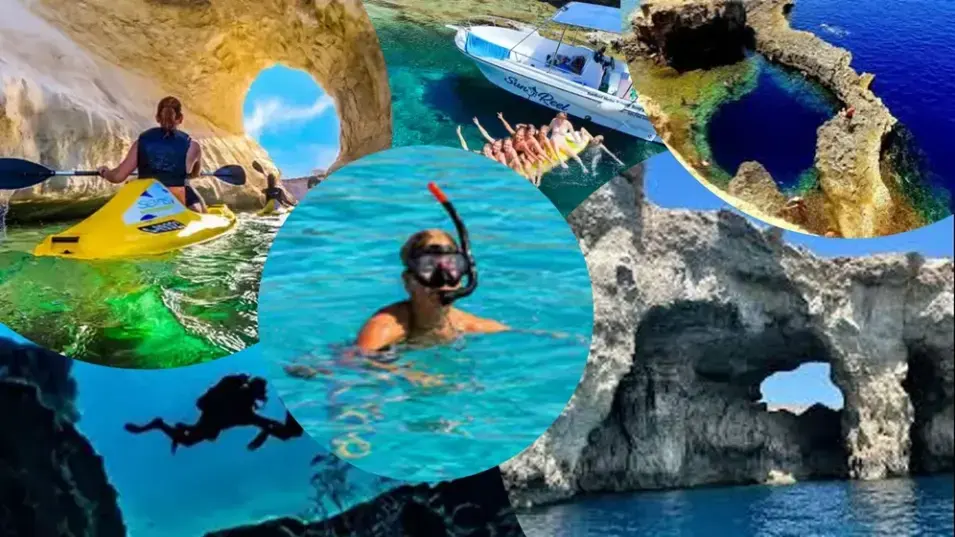
Why Visit Dwejra for Water Activities?
- swim in the sheltered Inland Sea;
- join a traditional boat trip through the cliff tunnel;
- snorkel around rocky coastal areas;
- dive at the Blue Hole;
- explore the Inland Sea Tunnel with a qualified dive centre;
- photograph sea caves and coastal formations;
- watch experienced divers entering the water;
- enjoy the changing colours of the Mediterranean;
- relax beside the water;
- combine a coastal visit with a full-day tour of Gozo.
Discover Dwejra Bay on an Organised Tour
Is There a Beach at Dwejra Bay?
- clear water;
- unusual geology;
- spectacular cliffs;
- the natural tunnel;
- diving and snorkelling;
- traditional boat trips;
- panoramic views.
The Inland Sea
How Was the Inland Sea Formed?
Swimming in the Inland Sea
- recreational swimmers;
- families with supervised children;
- snorkellers;
- divers preparing to enter the tunnel;
- passengers waiting for boat trips.
Swimming Near the Tunnel
Traditional Inland Sea Boat Trips
- the high walls inside the tunnel;
- different colours in the limestone;
- reflected blue light;
- caves and openings along the outer coast;
- the cliffs surrounding Dwejra;
- views towards Fungus Rock;
- parts of the coastline that cannot be seen from the road.
How Do the Boat Trips Work?
- how long the trip will take;
- which section of coastline will be visited;
- whether conditions are suitable;
- whether life jackets are available;
- whether the boat will return to the same departure point;
- what payment methods are accepted.
When Do the Inland Sea Boats Operate?
- the season;
- daylight;
- passenger demand;
- maintenance;
- local operating arrangements.
Is the Boat Trip Suitable for Children?
- whether the child is comfortable in a small boat;
- whether suitable life jackets are available;
- the possibility of movement or spray;
- the absence of facilities on board;
- the need to remain seated;
- the operator’s instructions.
Is the Boat Trip Suitable for Visitors with Limited Mobility?
- uneven ground;
- steps;
- a low boat;
- movement caused by the water;
- assistance from the operator.
See More of Dwejra and Gozo
The Blue Hole
Why Is the Blue Hole Famous?
- a dramatic natural entry point;
- clear Mediterranean water;
- an underwater arch;
- steep rock walls;
- nearby caves and reef formations;
- access to the outer sea;
- varied marine life;
- striking underwater light.
Reaching the Blue Hole
Can You Swim in the Blue Hole?
- deep water;
- exposed sea conditions;
- slippery rock;
- surge;
- waves entering from the outer sea;
- divers ascending or descending;
- difficult entry and exit;
- limited space during busy periods.
Diving at the Blue Hole
- the vertical walls of the Blue Hole;
- the underwater arch;
- the open Mediterranean;
- reef formations;
- caves and overhangs;
- the remains of rock formations beneath the surface;
- marine life associated with rocky habitats.
Is the Blue Hole Suitable for Beginners?
- the walk over rough limestone;
- equipment handling;
- deep water;
- overhead or cave-like features;
- changing sea conditions;
- maintaining buoyancy near rock formations;
- the need to reserve sufficient air for the return.
Diving Qualifications
- an internationally recognised certification;
- a completed medical declaration;
- proof of recent dives;
- an orientation dive;
- appropriate insurance;
- parental consent for younger participants.
Guided Diving Is Strongly Recommended
- entry and exit points;
- the safest route over the rocks;
- weather exposure;
- currents and surge;
- the layout of the Blue Hole;
- the Inland Sea Tunnel;
- emergency arrangements;
- sensitive environmental areas.
The Azure Reef
Diving the Inland Sea Tunnel
- the length of the tunnel;
- reduced natural light;
- boat traffic;
- depth;
- buoyancy control;
- navigation;
- possible surge;
- the need to remain with a trained guide.
Other Dive Sites Around Dwejra
- the Blue Hole;
- the Azure Reef;
- Inland Sea and Tunnel;
- Coral Garden;
- Crocodile Rock;
- surrounding reef and cave areas;
- boat-accessed sites along the western coast.
Diving Conditions
- wind;
- waves;
- suspended particles;
- storms;
- boat activity;
- seasonal plankton;
- recent rainfall.
Diving Safety
- use a reputable professional centre;
- verify certification requirements;
- disclose relevant medical conditions;
- check equipment before entering the water;
- remain within qualification limits;
- monitor air and depth;
- maintain contact with the buddy or group;
- avoid entering caves without the appropriate training;
- maintain good buoyancy;
- protect marine life;
- cancel the dive when conditions are unsuitable.
Snorkelling at Dwejra
- limestone formations;
- small fish;
- rocky crevices;
- seagrass;
- changing light;
- submerged ledges;
- marine invertebrates.
The Best Snorkelling Areas
Snorkelling Equipment
- a properly fitting mask;
- snorkel;
- fins;
- water shoes for the shore;
- sun protection;
- a rash vest or wetsuit;
- a brightly coloured surface marker where appropriate.
Snorkelling with Children
- shallow water;
- calm conditions;
- a location away from boats;
- properly fitting equipment;
- short sessions;
- easy access back to shore.
Swimming at Dwejra Bay
Safe Entry into the Water
- identify the exact exit point;
- check the depth;
- look for submerged rock;
- observe waves for several minutes;
- ask local operators about conditions;
- keep away from moving boats;
- wear water shoes;
- enter slowly rather than jumping.
When Should You Not Swim?
- waves are breaking strongly over the rocks;
- the sea is visibly rough;
- local operators advise against it;
- boats have suspended operations due to conditions;
- visibility is poor;
- there is thunder or severe weather;
- you are alone;
- you cannot identify a safe exit;
- you feel tired, unwell or uncertain.
Waves, Swell and Currents
Cliff Jumping at Dwejra
- striking underwater formations;
- losing consciousness;
- being swept against rock;
- difficulty climbing out;
- injuring swimmers or divers below;
- delayed emergency access.
Kayaking at Dwejra
- waves;
- swell;
- reflected water movement;
- boat traffic;
- restricted visibility;
- changing wind;
- difficult landing places.
Stand-Up Paddleboarding
Sea Caves and Coastal Formations
- darkness;
- sharp rock;
- restricted exits;
- wave surge;
- falling material;
- disorientation;
- passing boats.
Marine Life at Dwejra
- sea bream;
- wrasse;
- damselfish;
- salema;
- octopus;
- moray eels;
- scorpionfish;
- groupers;
- barracuda;
- sea urchins;
- starfish;
- crabs;
- nudibranchs;
- jellyfish;
- seagrass meadows.
Posidonia Seagrass
- habitat for marine animals;
- nursery areas for young fish;
- oxygen production;
- sediment stabilisation;
- protection against coastal erosion.
Jellyfish
- leave the water calmly;
- avoid rubbing the area;
- follow current local first-aid advice;
- seek medical assistance for a serious reaction;
- call emergency services if breathing difficulties or severe symptoms occur.
Sea Urchins
Respect the Marine Environment
- take all rubbish away;
- avoid single-use plastics;
- never collect shells, plants or marine animals;
- avoid feeding fish;
- use environmentally responsible sunscreen;
- maintain good buoyancy while diving;
- never touch corals or delicate organisms;
- avoid damaging seagrass;
- keep noise to a minimum;
- follow official signs and local regulations.
Underwater Photography
- the Blue Hole arch;
- light inside the Inland Sea Tunnel;
- limestone walls;
- divers framed against blue water;
- reef formations;
- marine life;
- the Azure Reef;
- surface reflections.
- buoyancy control;
- buddy contact;
- awareness of depth;
- awareness of air supply;
- distance from fragile habitats;
- a clear route to the exit.
Surface Photography from the Water
- use a wrist strap;
- protect equipment from spray;
- avoid leaning over the side;
- use a fast shutter speed;
- keep lenses clean;
- respect other passengers;
- follow the operator’s instructions.
Drone Photography
Best Time for Water Activities
- warmer water;
- long daylight;
- more tourism services;
- frequent activity around the Inland Sea.
- crowds;
- limited parking;
- intense sun;
- heat on the exposed rocks;
- busy boat operations.
The Best Time of Day
- lower temperatures;
- fewer visitors;
- easier parking;
- calmer surroundings;
- softer light.
- warmer colours;
- pleasant summer temperatures;
- sunset possibilities.
Essential Water Safety
- never swim alone;
- tell someone where you are going;
- check the weather and sea;
- observe the water before entering;
- identify a safe exit;
- remain clear of boats;
- wear suitable footwear;
- supervise children continuously;
- avoid alcohol before water activities;
- protect yourself from the sun;
- carry drinking water;
- use qualified professionals for diving and kayaking;
- do not enter caves or tunnels independently;
- leave the water before conditions deteriorate.
What to Bring
- swimwear;
- towel;
- water shoes;
- mask and snorkel;
- sun hat;
- high-factor sunscreen;
- drinking water;
- light food;
- waterproof bag;
- dry clothing;
- mobile phone;
- basic first-aid supplies;
- prescription medication;
- cash or payment card;
- warm layer outside summer.
Equipment Hire
- cylinder;
- weights;
- regulator;
- buoyancy compensator;
- wetsuit;
- boots;
- fins;
- mask;
- computer;
- transport;
- guide;
- insurance.
Food, Drinks and Toilets
- season;
- weather;
- day of the week;
- time of day;
- maintenance;
- customer demand.
Parking
- joining a scheduled dive;
- meeting a tour;
- planning a boat trip;
- carrying heavy equipment;
- visiting during July or August.
Travelling by Public Bus
Accessibility
- uneven ground;
- pebbles;
- slipways;
- steps;
- wet surfaces;
- low boats;
- limited handrails;
- natural limestone.
Water Activities for Families
- sitting beside the lagoon;
- paddling in shallow water;
- supervised swimming;
- looking at the boat houses;
- watching the traditional boats;
- taking a short boat trip when conditions permit;
- eating at a nearby café.
Water Activities for Older Visitors
- viewing the Inland Sea;
- sitting beside the water;
- taking photographs;
- watching boats enter the tunnel;
- taking a boat trip if boarding is manageable;
- visiting as part of an organised Gozo tour.
Nearby Beaches and Swimming Locations
Nearby Attractions
- Dwejra Tower;
- Fungus Rock viewpoints;
- the former Azure Window site;
- St Anne’s Chapel;
- Ta’ Pinu Basilica;
- Għarb village;
- San Lawrenz;
- the Citadel in Victoria.
Explore Dwejra as Part of a Gozo Day Trip
Conclusion
Frequently Asked Questions About Dwejra Water Activities
These frequently asked questions cover swimming, snorkelling, diving, the Blue Hole, the Inland Sea, traditional boat trips, kayaking, marine life, safety, accessibility and visitor facilities at Dwejra Bay.
1. Does Dwejra Bay have a sandy beach?
No. Dwejra has a rocky coastline and a small pebble and shingle shoreline beside the Inland Sea. Ramla Bay is a better option for visitors specifically looking for a large sandy beach.
2. Can you swim at Dwejra Bay?
Yes. Swimming is possible when conditions are safe. The Inland Sea is normally more sheltered than the Blue Hole and the exposed outer coastline.
3. Is the Inland Sea suitable for swimming?
The Inland Sea is the most accessible swimming area at Dwejra, but it remains a natural lagoon without guaranteed lifeguard supervision.
4. Is the Inland Sea really connected to the Mediterranean?
Yes. A natural tunnel through the cliffs connects the lagoon directly to the open Mediterranean Sea.
5. Can I swim through the Inland Sea Tunnel?
Ordinary visitors should not attempt to swim through it. The tunnel has boat traffic, reduced light, changing depths and potentially rough conditions towards the outer entrance.
6. Can I take a boat through the tunnel?
Yes, when local operators are running and sea conditions permit. Trips may be cancelled during strong winds or rough seas.
7. Where do the boat trips depart?
The traditional small boats normally depart from the water's edge at the Inland Sea.
8. Can I book the local boat trip online?
The short traditional boat rides are generally arranged locally. Booking arrangements and availability may change, so check on arrival.
9. How much does the boat trip cost?
Prices can change. Check the current fare directly with the operator before boarding.
10. How long does the boat trip take?
The trip is normally relatively short, but the precise duration and route depend on the operator and sea conditions.
11. Do the boats operate every day?
No operation is guaranteed. Rough seas, strong wind, maintenance or low seasonal demand can prevent trips from running.
12. Are life jackets provided on the boat trip?
Ask the operator before purchasing a ticket and make sure suitable safety equipment is available for every passenger.
13. Is the boat trip suitable for children?
It can be suitable when conditions are calm, the operator agrees and appropriate safety equipment is available. Children require close supervision.
14. Is the boat trip wheelchair accessible?
Boarding a small traditional boat can be difficult because of uneven access and movement on the water. Ask the operator to assess the situation before purchasing a ticket.
15. What is the Blue Hole?
The Blue Hole is a natural vertical rock formation connected to the open sea through an underwater arch. It is one of Gozo's best-known dive sites.
16. Can non-divers visit the Blue Hole?
Yes. Visitors can view the area from land, although the access route crosses uneven natural limestone.
17. Can I swim in the Blue Hole?
Experienced swimmers sometimes enter when conditions are suitable, but it is deep and exposed and should not be treated as a family swimming pool.
18. Is the Blue Hole safe for children?
The Inland Sea is generally the more appropriate choice. Children should not enter the Blue Hole without expert assessment and very close supervision.
19. Can I jump into the Blue Hole?
Cliff jumping is strongly discouraged because of submerged rock, changing water conditions, divers below the surface and difficult exit points.
20. How deep is the Blue Hole?
Depth varies across the formation and surrounding dive area. The underwater arch begins at approximately six metres and extends towards around fifteen metres, with deeper water farther outside.
21. Is the Blue Hole suitable for beginner divers?
Suitability must be decided by a qualified local dive professional after considering certification, recent experience and current sea conditions.
22. Do I need a diving certificate?
Certified recreational dives require evidence of a recognised qualification. Beginners must participate through an authorised training programme.
23. Can I dive independently at Dwejra?
Visitors unfamiliar with the site should use a professional local dive centre. The difficult access and complex underwater environment make local guidance important.
24. What is the Azure Reef?
The Azure Reef is the underwater area created by large limestone blocks from the Azure Window after the arch collapsed in 2017.
25. Can I dive at the former Azure Window?
Qualified divers may explore the Azure Reef as part of a professionally planned and supervised dive.
26. Can I dive through the Inland Sea Tunnel?
Properly trained and equipped divers can explore the tunnel with professional guidance. It is not suitable for uncertified visitors.
27. Is snorkelling good at Dwejra?
It can be excellent when the water is calm and clear. The Inland Sea is the easiest starting point for casual snorkellers.
28. Where is the safest place to snorkel?
The sheltered side of the Inland Sea, away from boat traffic, is normally more manageable than the exposed outer coast.
29. Can children snorkel at the Inland Sea?
Yes, under continuous adult supervision and in calm, shallow water away from boats and the tunnel route.
30. Do I need water shoes?
Water shoes are highly recommended because the shore and underwater surfaces contain stones, rough limestone and potentially sea urchins.
31. Are there jellyfish at Dwejra?
Jellyfish can occur. Their presence changes according to currents, wind and season, so inspect the water and ask locally before swimming.
32. Are there dangerous fish?
Most marine animals avoid people. Divers and swimmers should not touch unfamiliar species because some, including scorpionfish and moray eels, can cause injury when disturbed.
33. Can I see octopuses?
Octopuses live around Gozo's rocky coastline, but sightings cannot be guaranteed.
34. Can I see dolphins?
Dolphins may occasionally be seen in Maltese waters, but they are not a normal or guaranteed Dwejra attraction.
35. Can I collect shells or sea animals?
No. Leave shells, plants, rocks and marine organisms in their natural environment and do not disturb protected habitats.
36. Is kayaking possible at Dwejra?
Kayaking may be possible in suitable conditions, preferably as part of a professionally guided activity.
37. Can I kayak through the tunnel?
Only consider this with appropriate permission, local knowledge, suitable conditions and full awareness of boat traffic.
38. Can I use a paddleboard?
Possibly in calm conditions, but paddleboard users must remain clear of the boat route and understand the wind and sea conditions.
39. Are there lifeguards?
Do not assume a lifeguard is present. Visitors must assess conditions themselves and supervise children continuously.
40. Are there changing rooms?
Facilities are limited compared with a developed beach resort. Arrive prepared and use available facilities only where permitted.
41. Are there toilets?
Public facilities may be available near the visitor area, although opening and maintenance can vary.
42. Are cafés available?
Food and drink outlets normally operate near the Inland Sea, particularly during the main tourism season.
43. Is there shade?
Natural shade is limited. Bring a hat, sunscreen and sufficient drinking water, especially during summer.
44. What is the best month for swimming?
The warmest sea conditions generally occur from summer into early autumn, although weather, swell and personal preference differ.
45. What is the best time for diving?
Diving is possible throughout much of the year, subject to weather, sea conditions and professional assessment.
46. Is Dwejra suitable in winter?
It can be spectacular, but rough seas may prevent swimming, boat trips and diving. Keep well away from exposed rock platforms during storms.
47. Is parking free?
Parking arrangements can change. Check signs and local restrictions when you arrive and do not block boat access or emergency routes.
48. Can I reach Dwejra by bus?
Yes. Public buses connect Dwejra with Victoria. Check the latest official timetable before travelling, especially for the final return service.
49. May I fly a drone at Dwejra?
Drone use is not freely permitted. Do not fly unless you have obtained all licences, insurance, authorisations and permissions required in Malta and for the protected Dwejra area.
50. Can I visit Dwejra on an organised tour?
Yes. Dwejra is included in many Gozo sightseeing tours. Check whether the itinerary provides enough free time for swimming or a separately purchased local boat trip.