Xwejni Salt Pans Gozo – History, Visitor Guide and Tours
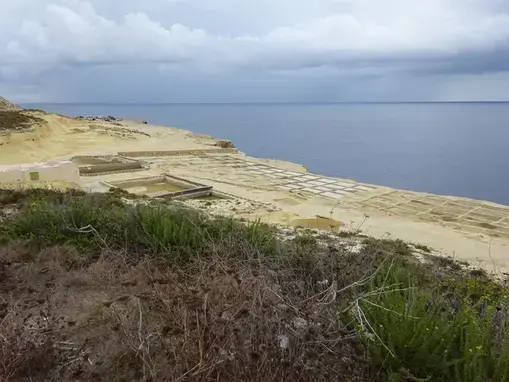
The Xwejni Salt Pans form one of Gozo’s most distinctive cultural landscapes: a vast chequerboard of shallow pools cut into pale coastal limestone beside the blue Mediterranean. These are not decorative ruins. Local families still use sections of the pans to produce natural sea salt by hand during the dry summer season.
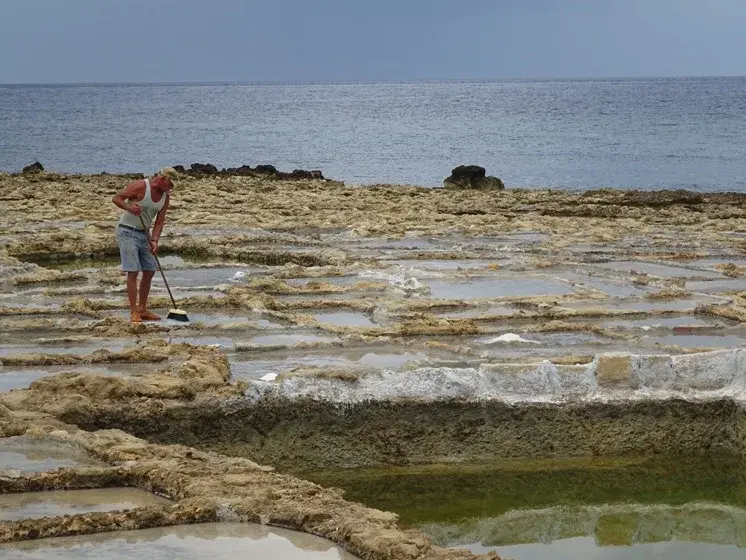
The coastline is beautiful throughout the year, but a summer visit may let you see salt crystals forming or harvesters working with brushes, buckets and traditional knowledge passed through generations. The setting is open and exposed, so responsible behaviour matters: observe from the road or permitted paths, respect signs and never step inside an active pan.
You can visit independently by bus, car, taxi or on foot from Marsalforn. A guided Gozo tour is often the easiest choice for visitors staying on Malta who want to combine Xwejni with the Citadel, Dwejra, Ta’ Pinu and other island highlights in one day.
Xwejni Salt Pans visitor information
Quick facts
Location: Triq ix-Xwejni, on Gozo’s north coast, west of Xwejni Bay and Qbajjar Bay
Locality: Limits of Żebbuġ, Gozo, Malta
Admission: Free to view from the public coastal road and permitted paths
Opening hours: The outdoor landscape can be viewed throughout the year; working areas and salt shops use their own arrangements
Salt-harvesting season: Usually from mid-May until the beginning of September, weather permitting
Best chance of seeing a harvest: Hot, dry summer weather; the exact working day cannot be guaranteed
Recommended visit: 45 to 90 minutes
Best for: Cultural heritage, coastal scenery, photography, walking and local food traditions
Public transport: Bus route 310 from Victoria; use the Xwejni stop and check the current return timetable
Parking: Informal roadside parking is available in parts of the area, but spaces can be limited and road conditions vary
Accessibility: Some pans can be viewed from the road, but the limestone shore, working areas and coastal paths are uneven and are not fully step-free
Essential rule: Do not enter, step into or rinse equipment in the salt pans
Why are the Xwejni Salt Pans worth visiting?
Xwejni combines living heritage with an extraordinary seascape. The geometric pools change with the weather and season: they may appear dry and pale, hold reflected blue sky, develop white crusts of salt or contain small heaps left during the harvest.
The site also reveals something important about Gozo. Generations of residents adapted a difficult rocky coast into a productive landscape using seawater, limestone, sunlight and skilled manual work. Seeing the pans makes the island’s traditional food culture tangible in a way that a packaged souvenir alone cannot.
Strong reasons to visit include:
• Seeing an active traditional salt-production landscape rather than a reconstructed attraction.
• Photographing the chequerboard pattern against the open Mediterranean.
• Learning how seawater becomes edible sea salt through concentration, evaporation and careful harvesting.
• Supporting local producers by buying genuine Gozitan sea salt when a recognised shop or producer is open.
• Combining the visit with Xwejni Bay, Qbajjar Bay, Marsalforn or a longer walk towards Wied il-Għasri.
• Adding a short but memorable cultural stop to a wider Gozo itinerary.
What are the Xwejni Salt Pans?
The salt pans are shallow basins carved into or formed on the coastal limestone. The working landscape extends for roughly three kilometres from the Qbajjar and Xwejni area towards Reqqa Point. From higher ground, the many reservoirs and crystallising pans resemble an enormous irregular chessboard.
Not every pool has the same function. Larger feeding reservoirs hold seawater while evaporation raises its salt concentration. The concentrated brine is then moved into smaller and shallower pans, where the remaining water evaporates and salt crystals develop.
The surrounding caves and rock-cut stores are also part of the system. Harvested salt is dried, stored and prepared for sale rather than being left permanently beside the sea.
History of salt production at Xwejni
Producing sea salt through solar evaporation has ancient roots in the Maltese Islands. Official and local heritage sources connect the broader technique with Phoenician and Roman times. The visible working pans at Xwejni are generally described as approximately 350 years old, so the age of the present landscape should not be confused with the much older history of salt-making methods.
Salt was valuable because it flavoured food and, before refrigeration, helped preserve it. Coastal salt production therefore had practical economic importance rather than being a picturesque seasonal activity.
The Żebbuġ Heritage Trail records that salt harvesting was encouraged again during the British period through government concessions that allowed local people to work and share ownership of pans. Knowledge and working rights then passed through families.
Two names remain particularly connected with Xwejni: the Attard family and the Cini family. The Cini tradition is documented from at least the 1860s, and Josephine Xuereb represents the fifth generation of her family’s salt-making heritage. Her father Manuel became widely known as Leli tal-Melħ, meaning Manuel the Salt Man. The Attard family also maintains extensive pans and a long salt-producing tradition in the area.
This continuity makes Xwejni more than a historic site. It is a seasonal workplace whose preservation depends on maintenance, suitable weather and respectful visitors.
How is sea salt made at Xwejni?
1. Maintaining the pans
Before the main harvest season, damaged walls and surfaces must be repaired. Wind, waves, rain and erosion can break the narrow limestone divisions or contaminate the basins.
2. Filling the feeding pools
Seawater is pumped into larger reservoirs. Sun and wind begin evaporating the water and increase the concentration of salt in the remaining brine.
3. Moving brine into shallow pans
The concentrated water is transferred into smaller crystallising pans. Their shallow depth exposes a large surface area to the heat of the sun.
4. Waiting for crystals to form
In suitable hot and dry conditions, evaporation leaves salt crystals after approximately one week. Rain, high humidity, rough weather or unsuitable wind can interrupt the cycle.
5. Sweeping and collecting the salt
Workers use brushes and brooms to gather the crystals into small heaps. The salt is lifted into buckets and carried away from the pans. This is skilled physical work, often undertaken early to avoid the strongest summer heat.
6. Drying and storing
The collected salt is allowed to dry before being bagged and stored, traditionally in caves cut into the rock beside the coast. The pans can then be refilled for another weather-dependent cycle.
The process uses natural evaporation as its driving force, although a motor pump may be used to move seawater and brine. No visitor should touch the salt, enter a working pan or interfere with stored heaps.
Best time to visit the Gozo Salt Pans
Mid-May to early September
Visit during the dry summer season for the best chance of seeing active salt production. Harvesting may occur approximately once a week when conditions are suitable, but there is no fixed public demonstration timetable. Rain or stormy weather can halt production, and work may begin very early in the day.
Spring
Spring is excellent for walking because the coast is cooler and surrounding vegetation can still be green. The pans may be under maintenance or holding water rather than producing finished salt.
Autumn and winter
The reflective pools, dramatic clouds and rougher sea can be visually impressive outside the harvest season. However, the exposed coast becomes less comfortable and potentially hazardous during strong wind, high waves or rain.
Best time for photographs
Early morning provides softer light and a quieter atmosphere. Late afternoon and sunset can produce warm colours and reflections in pans that contain water. Midday gives strong contrast but also the harshest heat and glare.
Remain on the road or permitted paths when composing photographs. A striking image never justifies entering a working pan, crossing a barrier or approaching an unsafe coastal edge.
How to get to the Xwejni Salt Pans
By bus from Victoria
Malta Public Transport route 310 connects Victoria with Marsalforn through Qbajjar and Xwejni. Leave the bus at the Xwejni stop and allow roughly ten minutes to reach the principal working pans, depending on the exact section you want to view.
Timetables and service arrangements can change. Check route 310 and the return journey on the official Malta Public Transport website or Tallinja app shortly before travelling. Do not rely on an old screenshot of the timetable.
Walking from Marsalforn
A pleasant coastal route leads west from Marsalforn through Qbajjar Bay and Xwejni Bay. Depending on your starting point and pace, allow approximately 30 to 45 minutes to reach the main salt-pan area. Add time for photographs, refreshments and stops beside the bays.
The route is exposed to sun and wind. Wear supportive shoes, carry water and avoid the coastal walk in unsafe weather or darkness unless you know the area and have suitable equipment.
By car or taxi
Follow the coast west from Marsalforn through Qbajjar and Xwejni, or approach from Żebbuġ. The road passes directly beside sections of the pans. Informal roadside parking is available in places, but spaces may fill during summer and some stretches are narrow, dusty or uneven.
Park only where it is permitted and safe. Do not block doors, working access, salt stores, bus stops or the route used by local vehicles. A taxi or ride-hailing service is convenient, but arrange collection in advance if visiting a quiet section late in the day.
On an organised tour
Many full-day Gozo excursions include the salt pans among several island stops. This is convenient for visitors staying on Malta because transfers, the sea crossing and transport around Gozo can be organised together.
Always read the live itinerary before booking. A tour may provide only a short photo stop, and routes can change because of weather, traffic, ferry operations or operational requirements.
Tours that visit the Xwejni Salt Pans
Gozo 4x4 Jeep tour with lunch and transfers
This full-day option is suited to first-time visitors staying on Malta who want to see several Gozo highlights without arranging ferries, buses and parking separately. The current itinerary lists the Xwejni Salt Pans together with locations such as Marsalforn, Dwejra, Ta’ Pinu and the Citadel. Lunch and selected transfers are included, while optional entrance fees and local activities should be checked on the live booking page.
Guided Gozo e-bike tour
This small-group guided ride is a more active choice. The current 3.5-hour itinerary focuses on the Salt Pans, Ta’ Pinu Basilica and Wied il-Mielaħ. It is best for visitors comfortable riding an e-bike on Gozo’s hilly and sometimes uneven roads. Check age, height, fitness and safety requirements before booking.
Private sunset picnic and salt-pans tour
This targeted 2.5-hour private experience is designed for visitors already on Gozo. Its current itinerary combines a sunset picnic, Wied il-Mielaħ and the Xwejni Salt Pans, with pickup and drop-off on Gozo. The activity involves short walks on uneven terrain and is currently listed as unsuitable for wheelchair users and people with food allergies. Read the dietary and mobility conditions carefully before booking.
Which tour should you choose?
Choose the full-day Jeep tour when convenience from Malta and a broad first introduction to Gozo matter most.
Choose the e-bike tour when you want an active small-group experience centred on Gozo’s north-western landscapes.
Choose the private sunset experience when you are already staying on Gozo and prefer local food, a relaxed pace and a more focused visit.
Choose independent travel when you want maximum time for photography or a longer coastal walk. Independent visitors should still check public-transport times and respect all working areas.
Responsible visiting and safety
The pans are both cultural heritage and a source of food. A footprint, rinsed diving item, dropped drink or piece of litter can contaminate a pan and spoil days of work.
Follow these rules:
• Never step into or walk across a salt pan.
• Obey barriers, painted warnings and instructions from the salt harvesters.
• Do not touch, taste or move salt heaps unless a producer offers a product for sale.
• Do not rinse swimming, diving or fishing equipment in any pan.
• Keep children under close supervision beside the road, working pans and coast.
• Keep away from the coastal edge and exposed rocks during rough weather.
• Beware of high waves and rip currents; do not assume that calm-looking water is safe.
• Do not swim or dive alone, and use recognised entry points only when conditions are suitable.
• Take all rubbish away and avoid disturbing workers, residents or wildlife.
• Dial 112 in an emergency in Malta or Gozo.
Accessibility and reduced mobility
Sections of the salt pans can be seen from the coastal road, which means visitors may enjoy a meaningful view without entering the uneven working landscape. This roadside visibility is the most practical option for someone who cannot walk far.
The site as a whole is not fully accessible. Natural limestone, rough verges, narrow road sections, drops, salt-pan walls and a lack of continuous protective barriers can create difficulties. Parking conditions and the distance from a safe stopping place vary.
Wheelchair users and visitors with limited mobility should arrange transport that can stop safely at an appropriate roadside viewpoint. Confirm the accessibility of any organised tour directly with the provider, because vehicle steps and walking surfaces differ.
Can you buy sea salt at Xwejni?
Genuine Xwejni sea salt is sold by local producers and can also be found in shops around Gozo. Small stores associated with the working pans may open when producers are present, but they do not operate like a museum shop with guaranteed daily hours.
Buying directly from an established producer supports the families maintaining the pans. Keep the packaging sealed for travel and check customs or food-import rules before taking food products outside the European Union.
What to see near the Xwejni Salt Pans
Xwejni Bay and Qbajjar Bay
These neighbouring bays have small pebbly and rocky shores, clear water and a quieter character than central Marsalforn. Swimming and snorkelling are weather-dependent; use established access points and remain alert to boats and waves.
Marsalforn Bay
Marsalforn offers restaurants, cafés, a small beach, diving centres and frequent bus connections. It is a practical place for lunch before or after walking to the salt pans.
Wied il-Għasri
West of the main pans, Wied il-Għasri reaches the sea through a narrow limestone gorge. The area is rewarding for walking and photography, but access includes steps and natural terrain. Swimming should only be considered in safe conditions.
Ta’ Pinu Basilica
Gozo’s National Shrine stands in open countryside near Għarb. Its monumental limestone architecture and pilgrimage history provide a strong contrast with the working coastal landscape.
Dwejra Bay
Dwejra contains the Inland Sea, Fungus Rock, the Blue Hole area and the former Azure Window site. Allow enough time to explore it safely rather than treating it as a hurried photo stop.
Gozo Jeep Tour guide
If you are comparing organised transport, the MaltaGuidePRO Jeep Tour guide explains typical inclusions, route changes, mobility considerations, lunch and transfers in more detail.
Suggested half-day itinerary
Begin in Marsalforn with a short walk around the bay and traditional harbour. Continue west through Qbajjar and Xwejni, allowing time for coastal photographs. Spend 45 to 90 minutes viewing the salt pans and, when available, buying salt directly from a recognised local producer.
Return to Marsalforn for lunch, or continue by car or taxi towards Wied il-Għasri and Ta’ Pinu. Visitors using buses should check the return journey before extending the walk, as routes commonly connect through Victoria.
Avoid attempting a long exposed coastal walk in the strongest summer heat. An early start or late-afternoon visit is more comfortable, but leave sufficient daylight for the return route.
Why trust this Xwejni Salt Pans guide?
The visitor information on this page was checked on 24 August 2026 against official Visit Gozo information, the Żebbuġ Heritage Trail, Malta Public Transport route 310, the working Xwejni producer’s published process and live GetYourGuide activity pages.
The photographs were taken at the location and include the active salt-harvesting landscape and the visitor information board. Historical statements distinguish between the ancient roots of solar salt-making and the approximately 350-year age attributed to the present Xwejni pans. Dynamic details such as tours, bus times, harvesting activity and shop availability should always be checked again shortly before a visit.