Victoria Cittadella Gozo: Visitor Guide, History, Tickets and Tours
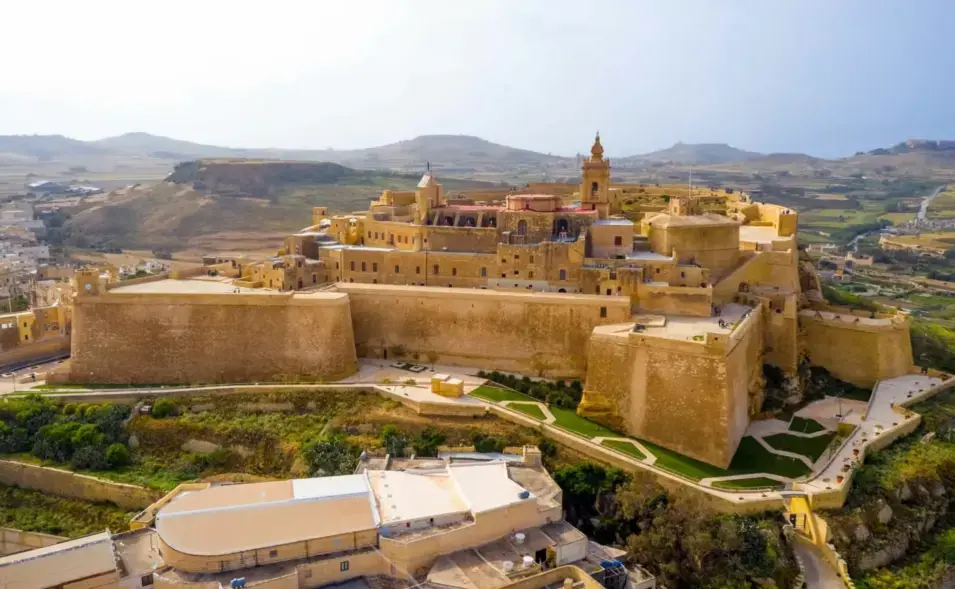
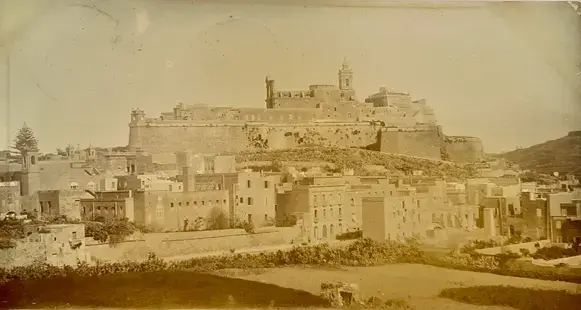
Victoria’s Cittadella rises above Gozo’s capital like a compact history book built in limestone. The free public ramparts look across almost the entire island, while the streets inside preserve traces of prehistoric settlement, a Roman acropolis, a medieval refuge, the devastating Ottoman attack of 1551 and the bastioned fortress created by the Knights of St John.
This guide explains what to see, which parts are free, the latest opening times and ticket arrangements, how to reach the site and how its story developed in chronological order. It also distinguishes the open fortress from the separately managed museums and cathedral, so that you can plan a realistic visit without confusing their hours or tickets.
As a resident of the island of Malta, I regularly travel to Victoria’s Cittadella simply because it is cozy and nostalgic, but also because I discover new things every time I go there. This is definitely highly recommended.
Victoria, Rabat and the Cittadella explained
Victoria is the official name of Gozo’s capital. The town was historically called Rabat, and that Maltese name is still used in everyday speech. The Cittadella is the fortified hilltop district within Victoria; it is not a separate town and it should not be confused with Mdina on Malta.
The fortress is also called the Citadel, Castello or Gran Castello. Its elevated position made it Gozo’s natural administrative centre and principal refuge for centuries. Today the lower streets of Victoria provide cafés, shops, a bus terminus and the lively squares of It-Tokk and St George, while the Cittadella provides history, museums and panoramic views.
Quick facts for visitors
• Fortress, streets and public ramparts: free and open 24/7 throughout the year.
• Cittadella Visitors’ Centre: normally open 09:00–17:00 on its operating days; last admission 16:30.
• Recommended visit: 90 minutes for the open site, or two to three hours with indoor attractions.
• Best time: early morning for quieter streets or late afternoon for softer light and sunset views.
• Main paid ticket: the Cittadella combo ticket; the Cathedral and its museum require a separate ticket.
• Terrain: steep approach, slopes, steps and some uneven historic surfaces.
• UNESCO status: on the Tentative List since 1998, but not an inscribed World Heritage Site.
Is Victoria Cittadella free?
Yes. The
official Cittadella Visitors’ Centre confirms that the fortress is an open public heritage site, available all year round, 24 hours a day and free of charge. You can enter the gates, explore the lanes, walk through the public sections and enjoy the rampart views even when the indoor attractions are closed.
The visitors’ centre, museums, cathedral complex, WWII shelters and Knights’ silos have their own arrangements. Some require payment, some are occasionally closed and some operate independently. Buying a ticket supports the maintenance of the historic site, but it is not compulsory for a rewarding first visit.
Opening hours and tickets for 2026
Cittadella Visitors’ Centre
January and February: Tuesday and Thursday to Sunday, 09:00–17:00; last admission 16:30. Closed Monday and Wednesday.
March to December: Tuesday to Sunday, 09:00–17:00; last admission 16:30. Closed Monday.
Annual closures: 1 January, Good Friday and 24, 25 and 31 December.
Official admission prices checked in August 2026:
• Adults: €5.00.
• Students and seniors: €3.50.
• Children aged 6–11: €2.50.
• Children under 6: free.
Credit or debit card payment is strongly recommended. The combo ticket includes the Cittadella Visitors’ Centre, Gozo Nature Museum, Old Prison and Gran Castello Historic House, subject to current openings. It does not include the Cathedral or Cathedral Museum.
Opening times, prices and temporary closures can change. Check the official visitor-centre page shortly before travelling rather than relying on an old screenshot or printed price list.
Important 2026 museum changes
The Gozo Museum of Archaeology closed on 13 April 2026 while Heritage Malta prepares the new Gozo Museum. Its shop remains temporarily available and the Cittadella combo ticket has not changed.
Parts of the Gozo Nature Museum are also closed during this work. Heritage Malta currently offers free access from Tuesday to Sunday to selected Natura 2000 displays, recreational areas and the garden. This arrangement may change as the museum project develops.
Gozo Cathedral: visitor hours, tickets and Mass
The Cathedral of the Assumption stands on the site traditionally associated with a Roman temple. Lorenzo Gafà designed the present Baroque church after the earthquake of 1693 damaged its predecessor. Its celebrated ceiling creates the illusion of a high dome even though the planned masonry dome was never built.
The official cathedral website lists tourist access to the Cathedral, Vestry and Cathedral Museum from Monday to Saturday, 09:00–17:00. They are closed to tourists on Sunday. Tickets are sold at the Cathedral Gift Shop. The listed admission is €5 for adults, €3 for seniors aged 60 and over and students, and €3 for children from age 11; children under 10 enter free. The cathedral lists a combined ticket with Gozo 360 at €7. Check for changes and remember that religious services take priority.
Mass times
Weekdays: 06:30, 07:30 and 18:30.
Sundays and holy days: 06:30, 08:00, 10:00, 11:30, 18:00 and 19:15.
These are worship times, not general sightseeing hours. Dress respectfully, keep shoulders and knees reasonably covered and avoid moving around or photographing worshippers during a service.
What to see inside the Cittadella
The ramparts and panoramic viewpoints
The walls provide the essential Cittadella experience. From the northern ramparts you can read Gozo’s landscape: villages gather around large parish churches, flat-topped hills divide cultivated valleys and the coastline appears beyond the fields. On a clear day the view reaches towards Malta and Comino.
The southern front is the most imposing military section. Its massive early-seventeenth-century bastions face Victoria and replaced weaker medieval defences. The quieter northern line preserves more of the fortress’s medieval character and follows the edge of the natural hill.
Cittadella Visitors’ Centre
Begin here if you want the site to make sense before walking around it. The centre occupies two water reservoirs constructed in the 1870s and explains the evolution, nature, military history, ecclesiastical history and civil life of the Cittadella. Interactive screens, panels and a short surround-theatre film are available in eight languages.
Cathedral of the Assumption and Cathedral Museum
The cathedral is the architectural focus of the upper square. Look for Lorenzo Gafà’s restrained Baroque exterior, the richly decorated interior and Antonio Manuele’s trompe-l’œil ceiling, painted in 1739 to suggest a dome. The museum contains ecclesiastical art, silver, vestments, archives and objects linked with the Diocese of Gozo.
The Old Prison
The Old Prison preserves cells, corridors and graffiti cut by inmates into the limestone. Ships, dates, crosses, names and handprints turn its walls into an unusually personal record of confinement. Prison use within the Cittadella continued from the period of the Knights until 1962.
Gran Castello Historic House
This group of interconnected historic houses presents domestic life, trades, costume and rural traditions. It is especially useful for understanding the ordinary island community beyond the fortress’s military and ecclesiastical monuments.
Gozo Nature Museum
The museum explores the island’s geology, habitats, plants and animals. During the present partial closure, selected Natura 2000 displays and the rear garden remain available. The garden also provides a close view of the cathedral.
Ruins, lanes and hidden details
Do not rush only from museum to museum. The northern enclosure contains roofless houses, foundations, narrow passages, coats of arms and reused stonework. The mixture of inhabited buildings and archaeological remains shows how the fortified town contracted and changed rather than surviving as one frozen medieval scene.
Cittadella history: a chronological timeline
The Cittadella’s history is not one uninterrupted story of the Knights. Its hill was used long before their arrival and repeatedly changed function as communities, empires and military technologies changed.
Prehistory and antiquity
Late Neolithic period — possible first occupation
Archaeological evidence suggests that people may have used the hill during the late Neolithic period. Its natural height provided visibility and protection, although the surviving evidence becomes clearer in the Bronze Age.
Around 1500 BC — a fortified Bronze Age settlement
The hill was certainly occupied and fortified during the Bronze Age. This is the earliest secure phase in the long defensive history of the Cittadella.
Phoenician and Punic periods — an island centre
Under Phoenician and later Punic influence, the settlement developed as an important centre for Gozo. Its position supported administration, defence, religion and connections with Mediterranean trade.
From 218 BC — the Roman acropolis of Gaulos
Malta and Gozo entered the Roman sphere in 218 BC. Gozo became a privileged municipality and the hill functioned as the acropolis of Gaulos, serving administrative, military and religious purposes. The Roman town spread beyond the summit into the area later occupied by Victoria.
A substantial classical building or temple stood on the summit. Tradition identifies it with Juno and places it beneath the present cathedral. Archaeological discoveries made during later building works confirm important Roman remains, although details of the sanctuary should not be treated as completely certain.
Arab, Norman and medieval Gozo
870–1091 — the Arab period
The Arab conquest transformed the Maltese Islands’ language, agriculture and settlement history. Evidence for the Cittadella during this period is less complete than for later centuries, but the defensible hill remained central to the community that developed into medieval Rabat.
1091 — Norman intervention
Count Roger I’s expedition brought Gozo into the political orbit of Norman Sicily. Over the following centuries, rulers linked the islands closely with the Kingdom of Sicily while the fortified hill remained Gozo’s principal stronghold.
Around 1241 — the castle enters the written record
The report associated with Giliberto Abbate provides an early medieval written reference to Gozo’s fortified castle. By this period the former acropolis had become a compact castrum and refuge.
1274–1276 — Genoese attack and concern for the defences
A Genoese force attacked and plundered Gozo in 1274. A survey of the fortifications followed in 1276, showing that the crown recognised the need for repair and stronger defence.
After 1282 — Aragonese rule
Following the Sicilian Vespers, the islands came under the Crown of Aragon. The northern wall line visible today retains medieval and Aragonese characteristics, even though later alterations changed many buildings inside it.
Around 1350 — the Universitas Gaudisii
Gozo’s local governing body, the Universitas Gaudisii, developed during the later Middle Ages. Based in the fortified town, it dealt with local administration, taxation, markets, supplies, hygiene and defence.
Fifteenth century — Rabat grows outside the walls
The limited space inside the castle could no longer contain the population. Settlement expanded at the foot of the hill, forming the urban area now known as Victoria or Rabat, while the castle remained the administrative centre and emergency refuge.
The Knights of St John and the catastrophe of 1551
1530 — the Order of St John takes control
Emperor Charles V granted Malta and Gozo to the Order of St John. The Cittadella was still essentially a medieval stronghold. During raids, the inhabitants of Gozo were expected to seek shelter behind defences that were increasingly obsolete in the age of gunpowder.
July 1551 — Ottoman forces overwhelm the Cittadella
An Ottoman fleet associated with Sinan Pasha and Dragut attacked Gozo. After a short siege, the weak medieval fortifications failed. Visit Gozo states that, apart from about forty elderly or disabled inhabitants, the island’s population of roughly five thousand was chained and taken into slavery.
The attack devastated families, records, agriculture and settlement. Gozo required decades of migration and recovery to rebuild its population. The event remains the central trauma in the Cittadella’s history and explains the urgency of later fortification work.
1565 — the Great Siege changes defensive priorities
The Cittadella was not a principal battlefield during the Great Siege of Malta, but the conflict demonstrated the power of artillery and modern bastioned fortification. Gozo’s medieval refuge remained dangerously vulnerable.
1599–1622 — construction of the bastioned southern front
The Knights rebuilt the weakest southern side with defences designed for cannon warfare. Giovanni Rinaldini contributed the principal design, while work also drew on the Maltese military engineering tradition associated with Vittorio Cassar.
The project created a dominant central bastion, two demi-bastions, connecting curtains, cavaliers, a ditch and outer defensive works. The medieval northern line was largely retained. This combination explains why the Cittadella looks like a gunpowder fortress from Victoria but a medieval hill town from the north.
15 April 1637 — compulsory nightly refuge ends
For generations, Gozitans were required to spend the night within the Cittadella because of corsair raids. The obligation was lifted in 1637, allowing life to concentrate increasingly in Rabat and the surrounding villages.
Seventeenth century — abandonment proposals and military doubt
Even after the new bastions were completed, military planners questioned whether the small hilltop fortress could resist a major siege. Proposals considered abandoning or demolishing it in favour of a new stronghold elsewhere, but the Cittadella survived.
1693 — earthquake damage
The major Sicilian earthquake damaged the old church on the summit. The disaster created the opportunity to replace it with a new Baroque building.
1697–1711 — the present cathedral is built
Lorenzo Gafà designed the new Church of the Assumption in the form of a Latin cross. A planned dome was not completed, but the church became the dominant monument within the fortress.
1739 — creation of the illusionistic dome
Antonio Manuele painted a trompe-l’œil perspective on the ceiling. Viewed from below, it creates the convincing illusion of a drum and dome rising above the crossing.
Mid-eighteenth century — Fort Chambray reduces the military role
The construction of Fort Chambray near Mġarr offered a modern alternative stronghold overlooking the harbour approaches. The Cittadella gradually lost its position as Gozo’s only major place of military refuge.
French occupation and British rule
10 June 1798 — French occupation
French forces took Gozo during Napoleon’s campaign against the Maltese Islands. The occupation was short but deeply unpopular, especially after interference with church property and local institutions.
September–28 October 1798 — revolt, siege and French surrender
Gozitans rose against the French, who withdrew into fortified positions including the Cittadella. Archpriest Saverio Cassar helped lead the resistance. On 28 October the French garrison capitulated, two years before French rule ended on Malta.
1798–1801 — a brief autonomous administration
After the surrender, Gozo experienced a short period of local administration under Saverio Cassar while acknowledging the King of Sicily and Naples. British influence grew, and Gozo was reunited administratively with Malta by 1801.
1839–1843 — water infrastructure
The Gozo Aqueduct project improved the island’s water supply. Nineteenth-century reservoirs were later built in the Cittadella ditch; two of these structures now house the modern visitors’ centre.
1864 — creation of the Diocese of Gozo
The establishment of a separate Diocese of Gozo elevated the Church of the Assumption to cathedral status and strengthened the Cittadella’s religious importance even as its military role declined.
1 April 1868 — formal military decommissioning
British authorities removed the Cittadella from the list of active fortresses. Its walls remained a powerful landmark, but they were no longer maintained as a front-line military installation.
10 June 1887 — Rabat becomes Victoria
The town officially received the name Victoria during Queen Victoria’s Golden Jubilee. Rabat remained common in Maltese usage, while the fortress continued to be known as the Cittadella or Citadel.
Protection, restoration and the modern heritage site
1925 — official monument protection
The fortifications and several ruins inside the Cittadella were included in Malta’s official protection of antiquities, recognising that the site required preservation rather than redevelopment.
Second World War — air-raid shelters
Shelters were cut beneath the bastions to protect residents during air raids. They add a twentieth-century layer to a defensive landscape first shaped thousands of years earlier.
1962 — the end of the prison tradition
Prison use within the Cittadella ended in the twentieth century. The surviving Old Prison and its graffiti later became a heritage attraction rather than a functioning institution.
19 May 1998 — added to UNESCO’s Tentative List
Malta submitted the Cittadella for possible future World Heritage nomination. Tentative List status is a preliminary step only; the site has not been inscribed as UNESCO World Heritage.
2008–2010 — stabilisation and master planning
Work began to stabilise the fortifications and the weak geological layers beneath them. A masterplan then coordinated conservation, archaeology, access, interpretation and new uses for historic structures.
2014–2016 — major rehabilitation
An extensive project restored walls, façades, ruins, streets and public spaces. Archaeological remains were investigated and made more legible, while the old reservoirs were transformed into the visitors’ centre. Lifts and improved routes increased accessibility without removing the fortress’s historic character.
30 June 2016 — reopening of the restored Cittadella
The rehabilitated site was officially inaugurated after more than two years of intensive work. The result allows visitors to understand its combined prehistoric, classical, medieval, Hospitaller, British and modern layers rather than seeing only a picturesque fort.
Guided tours and Gozo day trips
You do not need a tour to enter the Cittadella. A guide becomes worthwhile if you want the ruins, wall phases and 1551 siege placed in context, or if you want transport from Malta combined with other parts of Gozo.
Victoria and Cittadella walking tour
A focused walking tour is the best match for travellers already staying on Gozo. It allows more time for Victoria’s squares, the ascent to the fortress, the ramparts and stories that are easy to miss on an independent walk.
Full-day Gozo sightseeing tour
Choose a coach or minibus tour if you are visiting from Malta and want transfers, a guide and several major sights in one day. Check how much free time the itinerary actually gives at the Cittadella and whether entrance fees are included.
Jeep or tuk-tuk tour
Jeep and tuk-tuk tours suit visitors who want the Cittadella combined with rural roads, coastal viewpoints and several short stops. These are broader Gozo experiences rather than detailed historical tours of the fortress.
Private Gozo tour
A private tour offers the greatest control over timing. Ask for a longer Cittadella stop if history and museums matter more than fitting every coastal attraction into one day.
All tour routes, languages, departure points, admission inclusions, availability and prices can change. Open the individual activity and read the current description before booking.
How to reach Victoria Cittadella
By bus from Mġarr Harbour
The official visitor-centre directions identify route 301 between Mġarr Harbour and Victoria. Alight at Victoria’s bus terminus, walk through the town centre towards It-Tokk and continue uphill along It-Telgħa tal-Belt. The final climb is steep but relatively short.
Public transport routes and schedules can change. Use Malta Public Transport’s current journey planner on the day of travel.
By car and parking
Follow signs for Victoria and then Cittadella. A private car park lies directly below the walls; the official visitor information says a flat fee of €2 per day is normally applied. Because this price and capacity are not guaranteed, check signs when you arrive.
Free public parking may be available near Victoria’s bus terminus and secondary school complexes. Central streets can be busy, particularly during weekday shopping hours, summer events and religious feasts.
Walking from central Victoria
The Cittadella is easy to combine with It-Tokk, St George’s Square and the Basilica of St George. The route is short but uphill. Wear shoes with reliable grip, especially after rain or when walking on polished limestone.
Accessibility and practical conditions
The Cittadella Visitors’ Centre, surrounding ditch and main entrance area are wheelchair accessible. Restoration introduced lifts and removed steps from many routes. The centre also has equipment for visitors with visual or hearing impairments, and service animals are accepted.
The site was deliberately built on a steep hill. Some passageways have strong gradients, historic surfaces can be uneven and not every viewpoint or interior is step-free. Wheelchair users may need assistance. Confirm the route and any lift maintenance with the visitor centre before a time-sensitive visit.
Summer heat is another practical accessibility issue. Shade is limited on parts of the walls. Carry water, use sun protection and avoid the hottest part of the day if you are sensitive to heat. In winter or strong winds, the exposed ramparts can feel considerably cooler than Victoria’s streets below.
How long to spend and the best time to visit
Allow 60 to 90 minutes for a free walk through the streets and ramparts. Two to three hours gives enough time for the visitors’ centre and selected museums. A half day is appropriate if you also want the cathedral complex, a careful reading of the historical displays and lunch in Victoria.
Early morning offers cooler conditions and fewer groups. Late afternoon gives warmer light across the limestone and is ideal for the panoramic walk. Sunset and evening are atmospheric because the public fortress remains open after the indoor sites close. If museums are essential, arrive no later than early afternoon and check the last-admission time.
Families should supervise children on steps, slopes and ramparts. The interactive visitors’ centre and Old Prison can make the history more tangible, while the open viewpoints provide regular breaks from museum interiors.
Personal perspective: why the Cittadella deserves time
As someone living on Malta and exploring Gozo repeatedly, I find that the Cittadella rewards a slower visit. The first view from Victoria is dominated by bastions, but once through the gate the place becomes a layered settlement rather than simply a fortress. The northern ruins, domestic buildings and small details are as important as the cathedral square.
The most memorable moment is often the rampart walk near the end of the visit. After learning how the site developed, the island-wide view explains why this hill mattered for administration, refuge and defence. It is worth leaving enough time to pause rather than treating the Cittadella as a quick photograph between tour-bus stops.
What to see near Victoria Cittadella
Central Victoria
Walk down to It-Tokk for cafés and market activity, then continue to St George’s Square and the Basilica of St George. These lower streets show the civic and commercial town that expanded beyond the fortified refuge.
Ta’ Pinu Basilica
Ta’ Pinu stands in open countryside west of Victoria and combines monumental architecture with Malta’s most important modern pilgrimage tradition. It is normally about 10 to 15 minutes away by car, depending on traffic.
Dwejra Bay
Dwejra combines the Inland Sea, Blue Hole area, coastal cliffs and Fungus Rock. It is a strong continuation after the Cittadella because it replaces urban history with Gozo’s most dramatic geology and seascape.
Marsalforn Bay
Marsalforn is a practical choice for a waterfront walk, swim or meal after sightseeing in Victoria. The journey is normally short, but buses and traffic vary by season.
Explore Gozo by jeep
A jeep tour can connect the Cittadella with several rural and coastal stops when you have only one day and do not want to organise transport independently.
Final planning advice
Visit the public ramparts even if you do not buy a ticket, but use the visitors’ centre if you want the long history to become understandable. Separate the fortress’s 24/7 access from the indoor opening hours, allow extra time for the cathedral if it interests you and check temporary museum notices shortly before your visit.
For the best balance, arrive early enough to see one or two interiors, walk the ramparts in late-afternoon light and finish in central Victoria. If you are coming from Malta for one day, compare the amount of independent time offered by each tour rather than choosing only by the number of stops.