St John's Co-Cathedral Valletta – Tickets, Caravaggio and Visitor Guide
I am a resident of Malta and lived in Valletta for 4 years; I have seen the inside of the church many times. We certainly paid a visit to the church whenever I had visitors, but it remains a wonderful and impressive experience. You cannot have been to Malta without having seen this church.
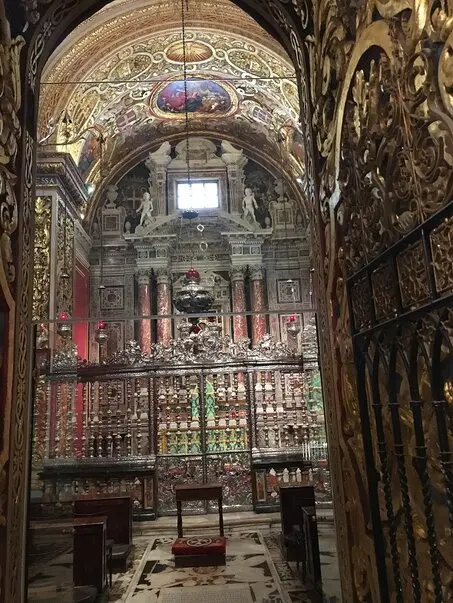
St John's Co-Cathedral is one of Valletta's essential sights and one of the finest Baroque interiors in Europe. Its restrained, fortress-like exterior gives little warning of the gilded stonework, painted vault, marble tombstones, richly decorated chapels and major works by Caravaggio waiting inside.
Built as the conventual church of the Order of St John, the Co-Cathedral remains both a place of worship and a nationally important historic monument. A standard visit includes the main nave, side chapels, Oratory, Caravaggio Centre and museum areas that are open on the day. The admission ticket includes a handheld audio guide.
QUICK VISITOR INFORMATION
Opening hours: Monday to Saturday, 09:00–16:45.
Last admission: 16:00.
Closed: Sundays and normally public holidays, although exceptional openings or closures may be announced.
Adult ticket: €15.
Senior ticket: €12.
Student ticket: €12.
Children: free for children under 12 when accompanied by an adult.
Recommended visit duration: approximately 1 hour 45 minutes.
Address: St John's Square, Valletta VLT 1156, Malta.
Audio guide: included, with 20 stops and several language options.
Visitor hours can change for state ceremonies, religious services, conservation work and special events. Check the official visitor notices before travelling, especially if your visit falls on a Saturday or public holiday.
The visitor entrance is located at the side of the Co-Cathedral rather than at the main façade. Queues may form during busy periods, so allow some extra time before your visit.
Why St John's Co-Cathedral is worth visiting
The attraction combines architecture, painting, sculpture, religious history and the story of the Knights of St John in a single building. Even visitors who do not normally visit churches often find the contrast between the severe façade and the spectacular interior unforgettable.
The principal highlights are Caravaggio's The Beheading of St John the Baptist and St Jerome Writing, Mattia Preti's painted barrel vault, the chapels associated with the Langues of the Order, the Grand Masters' monuments and the extraordinary floor of inlaid marble tombstones.
Allow enough time to use the audio guide rather than treating the church as a quick photo stop. The detail is dense, and the meaning of the chapels, monuments and heraldic symbols becomes far clearer with context.
Tickets and admission prices
Current standard admission prices are:
Adults: €15.
Seniors: €12.
Students: €12.
Children under 12: free when accompanied by an adult.
A valid ticket is required for entry. Online tickets are valid for one admission within seven days of the selected visit date, subject to the organiser's conditions. Documentary proof may be requested for reduced or special ticket categories.
The admission charge supports the conservation of the building and its works of art. Restoration is continuous because the monument contains delicate stone, gilding, paintings, textiles and marble surfaces.
Tickets can be purchased through the official ticket page. Booking in advance is useful during busy periods, but visitors should still check special opening notices because ceremonies can change the visitor schedule.
Opening hours and best time to visit
Visitor opening hours are Monday to Saturday from 09:00 until 16:45, with last admission at 16:00. The Co-Cathedral is closed to sightseeing visitors on Sundays and normally on public holidays. Religious services continue outside tourist visiting hours.
The quietest experience is usually near opening time. Mid-morning and early afternoon can be busier because of guided groups and cruise-ship visitors. A late entry at 16:00 leaves only 45 minutes, which is considerably shorter than the recommended visit time.
For a relaxed visit, arrive between 09:00 and 10:00 and reserve around 1 hour 45 minutes. Visitors particularly interested in Caravaggio, Baroque art or the Order of St John may wish to allow two hours.
Special masses, state events and internal functions can cause late openings, early closures or complete closure. Check the official news page shortly before the visit.
Dress code, bags and visitor rules
St John's Co-Cathedral is an active Roman Catholic church. Visitors must dress respectfully. Bring a shawl or other covering when shoulders or clothing may be considered unsuitable.
Stiletto heels and narrow heels are not allowed because they can damage the marble floor. Comfortable flat shoes are the best choice.
Small bags are recommended because there are no visitor lockers. Large handheld bags and backpacks must be carried by hand or worn at the front. Large wheeled luggage is not admitted. Food and drink are not allowed inside.
Photography is generally permitted, but flash photography is prohibited. Filming, audio recording and other moving-image or sound recording require prior written permission. Restrictions may be tightened during services, events or conservation work.
Accessibility
Wheelchair access and access for visitors with mobility difficulties are provided, although some historic areas have restricted access. The building was not designed as a modern museum, so routes and levels may differ from one area to another.
Identifiable guide, hearing and assistance animals are permitted; other animals are not. Visitors who require specific assistance should contact the Co-Cathedral before travelling.
Official contact:
St John's Co-Cathedral, St John's Square, Valletta VLT 1156, Malta.
Telephone: +356 2122 0536.
Audio guide and recommended visit length
The admission ticket includes a handheld audio guide with 20 stops. The official ticket information lists Maltese, English, Italian, French, German, Spanish, Polish, Japanese, Russian, Bulgarian and Romanian among the available languages.
The recommended visit duration is approximately 1 hour 45 minutes. This allows time for the nave, chapels, tombstones, Oratory, Caravaggio Centre and museum displays without rushing.
A useful route is to begin with the nave and vault, continue through the side chapels, examine several tombstones, and then give the Oratory and Caravaggio Centre sufficient time. Finish with the museum areas and any temporary exhibition accessible during the visit.
History of St John's Co-Cathedral
The church was commissioned by Grand Master Jean de la Cassière for the Order of St John after the Great Siege of 1565 and the foundation of Valletta. The building was designed by the Maltese military architect Girolamo Cassar and completed in 1577. It was dedicated to St John the Baptist, patron saint of the Order.
Originally, the interior was much more restrained. During the seventeenth century, successive Grand Masters and knights enriched it with paintings, sculpture, gilded carving, monuments and precious objects. The result is the extraordinary Baroque interior seen today.
The church became a co-cathedral in the nineteenth century, sharing cathedral status with St Paul's Cathedral in Mdina. The title reflects its role alongside the historic episcopal cathedral rather than replacing it.
The austere façade and Mannerist architecture
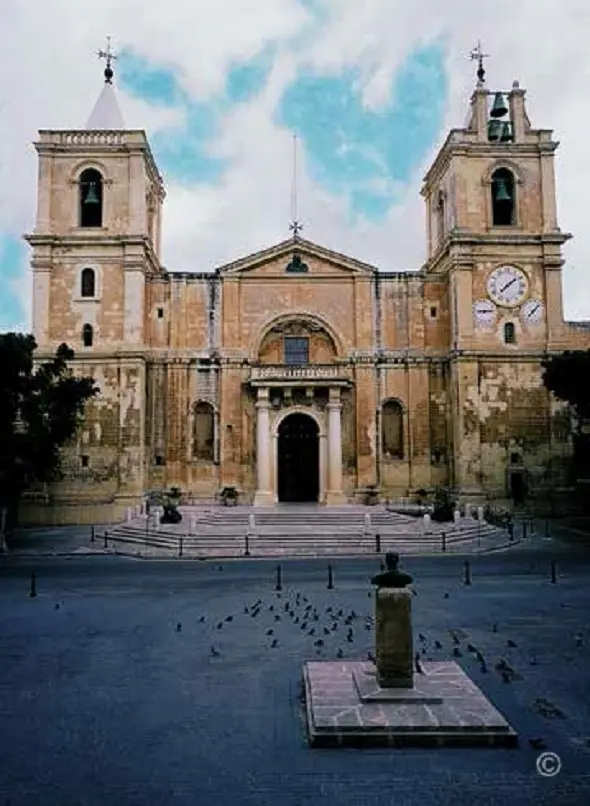
The exterior is deliberately severe. Its plain stone walls, twin bell towers and strong proportions fit the military character of the new fortified city. Girolamo Cassar's design is usually described as Mannerist rather than Baroque.
The entrance provides a more ceremonial focus. The balcony above it was associated with the public appearance of a newly elected Grand Master after investiture. Above the façade is a copy of the bust of Christ the Saviour bearing the words Salva Nos, meaning Save Us. The original work by Alessandro Algardi is preserved within the Co-Cathedral's collection.
This contrast between the restrained exterior and the lavish interior is intentional and is one of the building's most memorable characteristics.
Links under this section:
Mattia Preti's painted vault
The barrel vault of the nave is one of Mattia Preti's greatest achievements. The Italian Baroque artist decorated it with scenes from the life and martyrdom of St John the Baptist. Rather than using conventional fresco technique, Preti painted the scenes in oil directly onto the carved stone surface.
The cycle was created during the seventeenth-century transformation of the church. Painted architecture, dramatic figures and calculated shadows create trompe-l'oeil effects that make parts of the decoration appear three-dimensional.
Preti, known as Il Cavaliere Calabrese, spent much of his later life in Malta. He also designed or painted several altarpieces and contributed to the wider decorative programme of the church. He died in Malta in 1699 and was buried in St John's.
Caravaggio in St John's Co-Cathedral
The Oratory contains two works by Michelangelo Merisi da Caravaggio: The Beheading of St John the Baptist and St Jerome Writing. Together they make the Co-Cathedral one of Malta's most important destinations for art lovers.
The Beheading of St John the Baptist
The Beheading of St John the Baptist was painted in Malta and is Caravaggio's largest known painting. It is also the only work known to bear his signature. The composition is unusually spacious and restrained, using darkness, architecture and a small group of figures to intensify the drama.
Do not view it only from a distance. Notice the empty space, the controlled use of light and the way the action is concentrated close to the ground. The signature appears in the painted blood near St John's neck.
St Jerome Writing
St Jerome Writing is smaller and more intimate. It shows the ageing saint absorbed in study, with strong contrasts between light and shadow. The painting demonstrates Caravaggio's ability to give religious subjects an immediate human presence.
The Caravaggio Centre
The Caravaggio Centre adds interpretation to the Oratory visit. Its displays explain details in The Beheading, the history of St Jerome Writing and Caravaggio's life and work in Malta. Life-size projections and audio-visual material help visitors see details that are difficult to study in the Oratory itself.
Groups entering the Oratory may be limited in size to protect the visitor experience and the works of art.
The marble tombstone floor
The floor is covered by more than 400 inlaid marble tombstones commemorating knights and officers of the Order of St John. Each slab is a carefully composed memorial containing coats of arms, inscriptions and symbolic imagery.
Common motifs include skeletons, hourglasses, crowns, weapons, angels and personifications of death or eternity. These were not merely decorative. They communicated the rank, lineage, achievements and religious hopes of the person buried or commemorated.
The floor is fragile. This explains the ban on stiletto and narrow heels and the care required when moving around the church. Take time to study individual stones rather than seeing the floor only as one large pattern.
The inscriptions, heraldry and symbolism of the Co-Cathedral’s marble tombstones have been extensively researched by Dr Dane Munro, a scholar specialising in the history and legacy of the Order of St John. His two-volume book Memento Mori records, translates and explains the Latin inscriptions, offering valuable insight into the knights commemorated by the monuments and the meaning of their imagery, buy at the kiosk at the exit.
The side chapels and Langues of the Order
The nave is flanked by interconnected chapels associated with the Langues, or regional divisions, of the Order of St John. These groupings represented knights from different parts of Europe and competed in patronage, decoration and prestige.
The chapels include those linked with Auvergne, Provence, France, Italy, Germany, Aragon, and Castile, León and Portugal. The Anglo-Bavarian Langue reflects later changes in the Order's organisation.
Each chapel has its own dedication, monuments and artistic character. Look for differences in coats of arms, national saints and funerary sculpture. The Chapel of Our Lady of Philermos is particularly important because of the Order's devotion to the icon of the Virgin of Philermos.
Grand Masters' monuments and crypt
Several Grand Masters are commemorated through elaborate monuments combining portraiture, allegory, heraldry and military imagery. These monuments demonstrate how art was used to express authority and memory within the Order.
The Grand Masters' Crypt contains the remains of early leaders of the Order in Malta, including figures connected with the Great Siege and the foundation of Valletta. Access can depend on the visitor route and conservation arrangements.
The monuments reward close observation. Look for Ottoman trophies, armour, lions, personifications of virtues and references to naval or military victories.
Museum collections and Flemish tapestries
The Co-Cathedral preserves sacred vestments, illuminated choral books, silver, reliquaries, portraits and other works connected with the Order and the church's liturgical life.
One of the most important collections is the set of 29 Flemish tapestries commissioned by Grand Master Ramon Perellos y Roccaful after his election in 1697. Woven in Brussels by Judocus de Vos, the set is regarded as the largest complete tapestry series of its kind. The designs include the Triumph of the Eucharist and scenes from the life of Christ, based partly on compositions associated with Peter Paul Rubens and Nicolas Poussin.
Because textiles are sensitive to light, temperature and humidity, not every tapestry or object is necessarily displayed continuously. Check current exhibition information rather than assuming the entire collection will be visible.
Links under this section:
St John's as an active place of worship
The building is not only a museum. It remains a working church and hosts daily worship, feast-day liturgies, ordinations, state masses, sacred concerts and national ceremonies.
Regular ecclesiastical services listed by the Co-Cathedral are:
Monday to Friday: 08:30.
Saturday: 08:30 and 17:45.
Sunday and feast days: 07:45, 09:30, 11:30 and 17:45.
These times are for religious services rather than tourist admission. Service schedules may change on major feast days or for special ceremonies. Visitors attending Mass should enter as worshippers, dress appropriately and avoid sightseeing during the service.
Links under this section:
How to get there
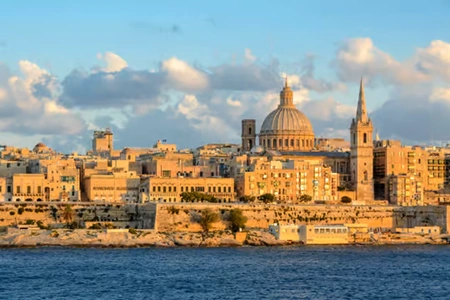
St John's Co-Cathedral stands in the pedestrian heart of Valletta, close to Republic Street and St George's Square. Valletta's compact centre is best explored on foot.
From the City Gate and the main bus terminus, walk along Republic Street towards the centre. The route is approximately ten minutes at an easy pace. The visitor entrance and ticket arrangements may direct you to the appropriate side of the building, so follow current signs.
Cars have limited access in central Valletta. Visitors arriving by car can use one of the paid car parks outside or below the city centre and continue on foot. Ferries from Sliema and the Three Cities provide scenic alternatives, followed by a walk or lift into the upper city.
Address:
St John's Square
Valletta VLT 1156
Malta
Guided tours and combined Valletta visits
A licensed guided tour is valuable because the Co-Cathedral contains a large amount of symbolism and historical detail. A Valletta walking tour can connect the church with the city's fortifications, auberges, palaces and gardens.
One relevant GetYourGuide option combines a guided Valletta walk with St John's Co-Cathedral. Inclusions and admission arrangements can change, so read the current product description before booking.
Practical tips for a better visit
Arrive near opening time for a calmer experience.
Allow approximately 1 hour 45 minutes rather than planning a brief stop.
Check official visitor notices shortly before travelling.
Wear flat shoes and clothing suitable for a church.
Bring only a small bag.
Do not use flash photography.
Use the included audio guide.
Give the Caravaggio paintings enough time; they are not incidental exhibits.
Look down at individual tombstones as well as up at the painted vault.
Combine the visit with nearby attractions rather than crossing Valletta several times.
What to see nearby
Grand Master's Palace
A short walk away, the Grand Master's Palace continues the story of the Order of St John through its State Rooms and Palace Armoury.
MUŻA – National Community Art Museum
MUŻA occupies the Auberge d'Italie and provides wider context for Maltese and European art. It is especially relevant for visitors interested in Mattia Preti and Malta's artistic heritage.
Santa Catherine of Italy
This small church opposite the Auberge d'Italie is connected with the Italian Langue and contains work associated with Mattia Preti.
Use the Valletta guide to plan a walking route between the Co-Cathedral, City Gate, Upper Barrakka Gardens, the Grand Harbour and other historic sights. More information ....
Final visitor summary
St John's Co-Cathedral deserves a central place in any Valletta itinerary. It brings together the history of the Knights of St John, the art of Caravaggio and Mattia Preti, one of Europe's most extraordinary marble floors and a living tradition of worship.
For the best experience, arrive early, allow around 1 hour 45 minutes, use the included audio guide and check the official website for special opening changes.