Ramla Bay Gozo: Red Sand Beach, Swimming and Tours
Ramla Bay, known in Maltese as Ramla l-Ħamra, is Gozo’s largest and best-known sandy beach. Its reddish-golden sand, broad swimming area, protected dunes and undeveloped valley make it very different from the rocky coves found around much of Malta and Gozo.
You do not need an admission ticket to visit the beach. Come independently for a relaxed beach day, or choose an organised Gozo tour when you want transport and several island highlights arranged for you. The most suitable option depends on whether your priority is swimming at Ramla Bay or seeing more of Gozo in one day.
Ramla Bay visitor information
Location: North-east coast of Gozo, below Xagħra and west of Nadur
Maltese name: Ramla l-Ħamra, meaning the red sandy beach
Admission: Free
Opening hours: Public outdoor area accessible throughout the year; there is no entrance gate
Beach type: Wide natural beach with reddish-golden sand
Best for: Swimming, sunbathing, families, photography and nature
Recommended visit: 2 to 4 hours, or a full beach day
Public transport: Route 302 from Victoria and route 322 between Mġarr Ferry Terminal and Marsalforn via Ramla
Facilities: Seasonal cafés, kiosks, toilets, sunbed hire and water-based services may operate near the beach
Accessibility: A paved approach and seasonal assistance may be available, but loose sand remains difficult for wheelchairs
Protection: Ramla Bay and its rare dune habitat form part of a Natura 2000 protected area
Why is Ramla Bay special?
Ramla Bay is one of the few large natural sandy beaches in the Maltese Islands. The contrast between the reddish-golden shore, blue water, green winter valley and terraced slopes creates one of Gozo’s most recognisable landscapes.
The beach has remained comparatively undeveloped. Refreshment outlets and visitor services are set back from the water rather than forming a continuous built-up promenade. This gives Ramla a more natural atmosphere than resort beaches, although it becomes busy during the main summer season.
Ramla’s sand is fine, red-brown and calcareous. It forms mainly when blocks of the Għajn Melel Member, part of the Upper Coralline Limestone, break down at sea level along the rocky coast below the Nadur promontory. Wave action erodes the blocks and longshore drift carries the sand into the bay. The reddish colour is attributed to glauconite, an aluminosilicate mineral in the parent rock. Light and moisture change how the colour appears, from golden and orange to red-brown. Please leave the sand where it belongs; taking natural material from a protected beach damages the site.
Swimming at Ramla Bay
Ramla Bay is popular for swimming because access is directly from the sandy shore. Conditions can be calm, but the bay is open to the north-east and waves or currents can develop when the wind changes.
Always check the flags, official notices and the actual sea before entering. Follow lifeguard instructions when seasonal coverage is operating. A red flag means that you should not swim. Never assume that a lifeguard will be present throughout your visit.
Children need continuous adult supervision, including in apparently shallow water. Stay within the designated bathing area, keep clear of water-sports equipment and do not swim alone in rough conditions. Jellyfish and temporary changes in water quality can occur around the Maltese Islands, so check current local information on the day.
Is Ramla Bay suitable for children?
The sandy shore and direct water access can make Ramla Bay practical for families when the sea is calm. The large beach also provides more space than many small Gozo coves.
However, water depth, waves and currents vary. Young children and weak swimmers must remain within arm’s reach of a responsible adult. Bring shade, drinking water and footwear because the sand becomes very hot in summer.
Snorkelling and water activities
Snorkelling is usually more interesting near the rocky sides of the bay than over the open sandy seabed. Enter only in calm water, remain visible and avoid areas used by boats or water-sports operators.
Seasonal water activities may be available, but operators, equipment and opening times can change. Check prices, insurance, safety instructions and age or licence requirements directly before paying.
The protected sand dunes
Behind the beach are some of the best remaining examples of contemporary and fossil Quaternary sand dunes in the Maltese Islands. The dune system extends inland and supports specialised plants, insects, reptiles and birds. Tamarisk roots also help stabilise the sand.
This habitat is fragile. Use the designated paths, stay outside cordoned areas, do not trample vegetation and never climb over protective barriers. Even a short detour across the dunes can damage plants that survive in a difficult, shifting environment.
History beneath the beach
Ramla Bay is more than a swimming place. Archaeological evidence shows that the valley and coast were used long before modern tourism. Roman remains lie beneath the sand, including evidence associated with a maritime villa. These remains are protected and are not presented as an open archaeological attraction.
The bay also had strategic importance because its broad shore offered a possible landing place. Historical features associated with the Knights of St John reflect attempts to defend this exposed part of Gozo’s coast.
Do not dig in the sand dunes or disturb stones in search of remains. Archaeology loses much of its meaning when removed from its original context, and unauthorised disturbance can be illegal.
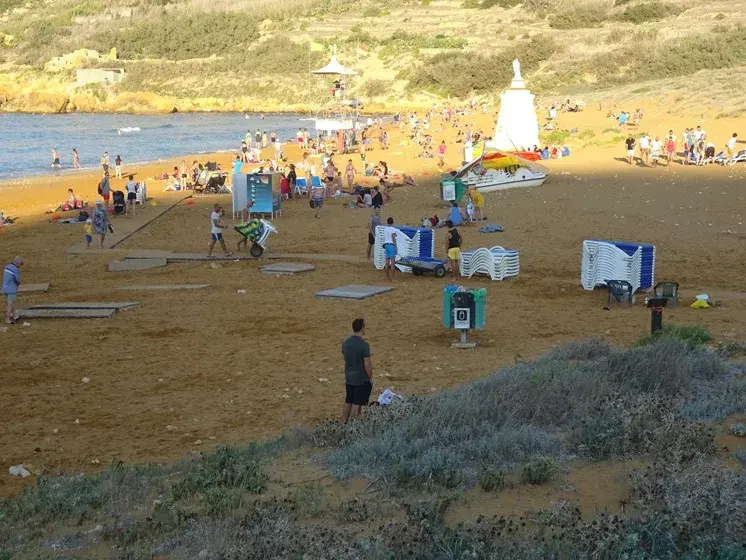
The white statue of Our Lady standing on the beach is one of Ramla Bay’s familiar landmarks. It also provides a useful visual reference when arranging to meet other people, but the surrounding area should remain clear and respectful.
Calypso’s Cave and Homer’s Odyssey
The western ridge above Ramla Bay is traditionally associated with Calypso’s Cave. Local tradition links Gozo with Ogygia, the island where the nymph Calypso kept Odysseus for seven years in Homer’s Odyssey.
This is a celebrated legend rather than a proven identification of Homer’s island. The cave itself has experienced instability and may be inaccessible. Treat the location as a viewpoint and cultural story, not as a guaranteed cave visit. Observe barriers and never enter a closed or unsafe area.
Tal-Mixta Cave viewpoint
Tal-Mixta Cave lies high above the eastern side of Ramla Bay and frames a memorable view across the red sand, valley and sea. The official approach begins from the Nadur side and follows country roads towards Triq l-Għassa tal-Maħraġ.
Do not attempt a direct scramble up unstable slopes from the beach. The cave floor and approach can be uneven, slippery or muddy. Wear shoes with good grip, keep away from cliff edges and avoid the exposed viewpoint during strong wind, heavy rain or poor visibility.
The cave is a natural place, not a managed ticketed attraction. Take photographs without blocking others, keep noise low and remove all rubbish.
Book a tour that includes Ramla Bay
Ramla Bay itself is free, so the value of a tour lies in transport, guiding and combining the beach with other parts of Gozo. Read the current itinerary before booking: some tours stop at the beach, some use an elevated viewpoint, and others pass through Ramla Valley without allowing swimming time.
Best option for seasonal beach time from Bugibba
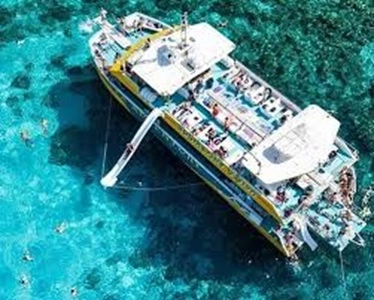
The Gozo and Comino boat excursion below offers a selectable land-transfer option to Ramla Bay from June to September when weather and operations permit. Choose the beach option during booking if Ramla is your priority. The same excursion also includes time around Comino, but the order and swimming programme can change for safety reasons.
Best option for a guided island overview
A full-day Gozo Jeep tour is better when you want viewpoints, villages, history and several major attractions rather than a long beach stay. The current itinerary names Calypso’s Cave and other Gozo highlights. It is not a dedicated swimming excursion, and the route can change.
Best option for independent exploration on Gozo
A GPS-guided quad rental gives licensed and confident drivers more freedom to choose their own route and spend time at Ramla Bay. This option involves responsibility for the vehicle, local traffic, parking and safety. Check driving-licence, age, deposit and passenger conditions before booking.
Compare all current Ramla Bay experiences
Use the Ramla Beach activity page to compare current tours, prices, reviews, availability, cancellation terms and accessibility information. Confirm that the selected date and itinerary genuinely include the stop you want.
AFFILIATE DISCLOSURE
MaltaGuide.PRO may receive a commission when you book through a GetYourGuide link. You pay no additional charge. MaltaGuide.PRO does not operate the tours; the activity provider remains responsible for the itinerary, transport, safety and service.
How to get to Ramla Bay
By bus from Victoria
Route 302 connects Victoria with Ramla. The official timetable currently shows an approximately hourly service, but times can change. Check the journey planner shortly before travelling and note the final return journey before settling on the beach.
By bus from Mġarr Ferry Terminal
Route 322 runs between the ferry terminal at Mġarr and Marsalforn via Ramla. This can provide a direct public-transport option after arriving on Gozo, depending on the day and time.
By car or taxi
Ramla Bay is reached by road from Xagħra or Nadur. Follow signs for Ramla or Ir-Ramla and drive carefully on narrow village and country roads.
Parking is available near the beach approach, but the closest spaces fill quickly on hot summer days, weekends and public holidays. Arrive early, obey all signs and markings, and never block bus stops, access routes, garages, reserved bays or emergency vehicles.
A taxi or app-based ride is convenient when you want a direct journey from Mġarr Harbour, Victoria or accommodation elsewhere on Gozo. Arrange the collection point before leaving the vehicle because mobile reception, crowds and traffic restrictions can complicate pickup at busy times.
Accessibility at Ramla Bay
The main road approach and parts of the visitor area are more accessible than the steep paths leading to many smaller Gozo coves. Previous official accessibility information has listed a walkway, accessible toilets, blue-badge parking, a lifeguard tower and beach wheelchairs at Ramla l-Ħamra.
These services can be seasonal, weather-dependent or temporarily unavailable. Confirm the current situation before making a special journey. Loose sand is difficult for standard wheelchairs, and access into the sea requires appropriate equipment and trained assistance.
Tal-Mixta Cave, Calypso’s Cave and the natural ridges above the bay are not suitable substitutes for the accessible beach area. Their approaches include uneven surfaces, slopes and exposed edges.
Facilities, food and shade
Small cafés, kiosks and stalls normally operate near the back of the beach, particularly in the warmer months. Seasonal rentals may include sunbeds and umbrellas. Availability, prices and payment methods can change, so do not depend on a particular service being open.
Natural shade is limited on the open beach. Bring drinking water, high-protection sunscreen, a hat and suitable shade for children. Use reusable containers where possible and secure lightweight belongings because coastal wind can increase suddenly.
Best time to visit Ramla Bay
May and June
Late spring and early summer are excellent for combining warm weather, swimming and a greener valley. Visitor numbers are usually lower than in July and August, although weekends can still be busy.
July and August
These are the hottest and busiest months. Most seasonal services are likely to operate, but parking, shade and the most convenient beach space are in greatest demand. An early arrival or late-afternoon visit is more comfortable than the hottest part of the day.
September and October
The sea often remains warm while the main summer crowds gradually decrease. Conditions can still feel summery, but shorter days and occasional unsettled weather make a same-day forecast useful.
November to April
Ramla Bay remains attractive for walking, photography and the open landscape. Swimming depends entirely on sea and weather conditions. Some visitor services may be closed, and heavy rain can make country paths muddy.
What to bring
Bring swimwear, towels, drinking water, sunscreen, a sun hat and a bag for your rubbish. Add water shoes or sandals for hot sand and firmer shoes with good grip if you plan to walk towards a viewpoint.
Carry any personal medication you may need. A charged phone and power bank are useful, but do not rely on the phone instead of checking the surroundings, flags and sea.
Responsible visiting
Ramla Bay is both a public beach and a protected natural site.
• Stay outside the protected dune areas.
• Use designated paths and respect barriers.
• Take all rubbish away or use the bins provided.
• Do not remove sand, plants, shells, stones or archaeological material.
• Do not light fires or leave cigarette ends.
• Keep noise low near wildlife and other visitors.
• Follow swimming flags and instructions from authorised personnel.
• Do not fly a drone without checking Malta’s current aviation, safety and privacy rules.
• Dogs are not permitted on Malta’s sandy beaches under the current official rules; use a designated dog-friendly beach instead.
What to see nearby
Xagħra and the Ġgantija Temples
The hilltop village of Xagħra is home to the UNESCO-listed Ġgantija Archaeological Park and Ta’ Kola Windmill. It is an excellent historical addition to a Ramla Bay day, but admission and opening hours apply to the heritage attractions.
Marsalforn Bay
Marsalforn offers a promenade, restaurants, diving centres and a small beach. Choose Marsalforn for waterfront facilities and dining; choose Ramla Bay for a broad natural sandy beach.
Nadur and San Blas Bay
Nadur overlooks eastern Gozo and provides the road approach towards Tal-Mixta Cave. San Blas Bay is a smaller, quieter red-sand cove nearby, but its steep access is much more demanding than Ramla Bay.
How this guide was checked
This page combines first-hand photographs and on-site information recorded at Ramla Bay with official visitor, environmental, public-transport and accessibility information. The tour descriptions and affiliate links were opened and checked on 25 August 2026.
Official sources used include Visit Gozo for the beach and Tal-Mixta Cave, Malta’s Environment and Resources Authority for the protected dune habitat, Malta Public Transport for routes 302 and 322, and the Commission for the Rights of Persons with Disability for published accessibility information.
Our practical recommendation is simple: visit independently when several hours on the beach are your main priority. Choose an organised tour when you value transport and a wider Gozo itinerary more than guaranteed swimming time. Always confirm current flags, services, bus times and tour conditions on the day.